
Sistine Chapel
Rome

Sistine Chapel
Artistically, the Sistine Chapel is an unparalleled masterpiece, housing the most famous frescoes of the Renaissance. While the side walls feature incredible works by masters like Botticelli and Perugino, it is Michelangelo Buonarroti’s contributions that define the space. His ceiling frescoes, painted between 1508 and 1512, and the massive Last Judgement on the altar wall, fundamentally altered the course of Western art. Every year, millions of visitors pass through its doors to stand beneath the iconic "Creation of Adam", experiencing a profound intersection of religious devotion, architectural grandeur, and artistic genius. Today, it remains a living place of worship and a testament to the enduring power of High Renaissance creativity.
Italy Tour Packages
Best time to visit
How to reach Sistine Chapel
- By Foot: If you are staying in the Prati district or near Borgo, the Vatican is easily accessible by walking. From the historic centre (near Piazza Navona), it is a scenic 20-minute walk across the Ponte Sant'Angelo.
- By Train/Metro: Take the Metro Line A (Orange) and exit at "Ottaviano-S. Pietro" or "Cipro." Both stations are a short 10-minute walk from the Museum entrance.
- By Car/Taxi: Driving is not recommended due to ZTL (restricted traffic zones) and limited parking. However, taxis and ride-shares can drop you directly near the entrance on Viale Vaticano.
Opening hours
Suggested Duration - 30-45 MinutesHighlights of Sistine Chapel
- Witness the historic site of the Papal Conclave, where the College of Cardinals gathers under strict secrecy to elect the next Pope.
- Marvel at Michelangelo’s artistic evolution by comparing the vibrant ceiling panels to the powerful, brooding style of The Last Judgement.
- Admire the "narrative duel" on the side walls, featuring a masterpiece collection by Renaissance icons like Botticelli and Perugino.
- Examine the intricate "trompe l'oeil" drapery painted on the lower walls, which masterfully mimics the appearance of real woven tapestries.
Point of Interests!

The Ceiling (Michelangelo’s Masterpiece)
Spanning over 5,000 square feet, the ceiling is a feat of physical and artistic endurance. Michelangelo painted it while standing on specialised scaffolding, depicting nine scenes from the Book of Genesis. The central panels are surrounded by a complex framework of architectural elements and figures
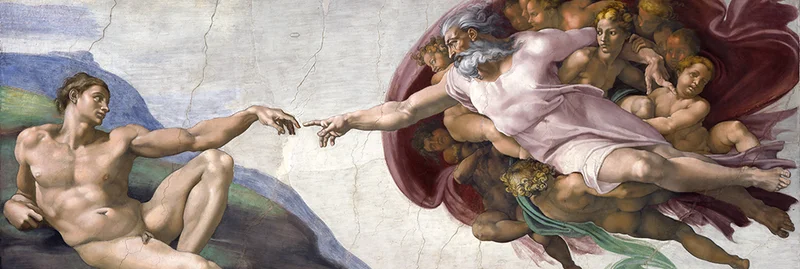
The Creation of Adam
This is arguably the most famous focal point of the ceiling. It captures the moment God breathes life into Adam, their fingers almost touching in a gap that crackles with divine energy. The composition emphasizes the relationship between the creator and the created, symbolizing the spark of humanity
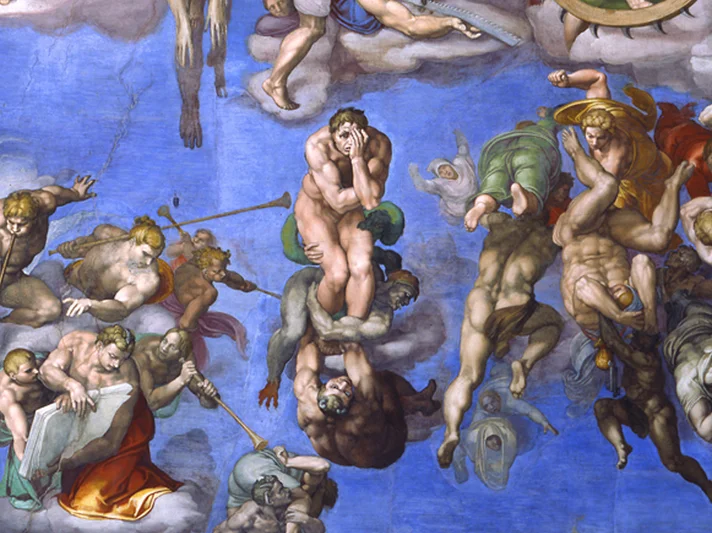
The Last Judgment
Covering the entire altar wall, this massive fresco was painted by Michelangelo decades after the ceiling. It depicts the second coming of Christ and the final eternal judgment of all humanity. The work is famous for its muscular, twisting figures and the artist’s self-portrait, depicted as the flay

The Prophets and Sibyls
Surrounding the central Genesis scenes are twelve large figures: seven Old Testament prophets and five classical sibyls (pagan prophetesses). These figures represent the anticipation of the coming of Christ in both the Jewish and Greco-Roman worlds. Michelangelo gave each figure a unique personality

The Ignudi
These are the twenty seated male nudes that flank the smaller panels of the central ceiling. While their exact theological meaning is debated, they serve as a celebration of the human form. The Ignudi are depicted in varied, athletic poses, showcasing Michelangelo’s unparalleled mastery of anatomy a

The Side Wall Frescoes
Before Michelangelo arrived, the side walls were decorated by a "dream team" of Renaissance artists, including Botticelli, Ghirlandaio, and Perugino. These frescoes are divided into two cycles: the Life of Moses on the left and the Life of Christ on the right. They provide a vital narrative bridge b

The Vault Architecture & Design
Michelangelo used 'quadratura', or forced perspective, to paint architectural ribs and cornices that don't actually exist. This illusionistic painting technique organises the vast space of the shallow barrel vault, directing the viewer’s eye through the narrative scenes. It creates a sense of soarin

The Papal Conclave Setting
The chapel’s layout is designed specifically for its liturgical and political functions. During a Conclave, the world’s cardinals sit along the walls on wooden benches. A temporary chimney is installed to emit the famous white or black smoke, signaling to the world whether a new Pope has been chosen

The Choir Area
To the right of the altar sits a permanent marble "cantoria" or choir gallery. This ornate space was designed to house the Sistine Chapel Choir, one of the oldest religious choirs in the world. Even today, the acoustics of the rectangular hall are perfectly suited for the sacred polyphonic music tha
Tips to visit Sistine Chapel
- Book in Advance: Secure your tickets online weeks ahead to avoid lines that can exceed three hours.
- Join a Guided Experience: Booking a Sistine Chapel tour is the most efficient way to understand the complex theological and historical layers of the frescoes.
- Respect the Silence: Staff strictly enforce a "no talking" policy to maintain the sanctity of the space.
- Look, Don't Snap: Photography and filming are strictly prohibited inside the chapel to protect the frescoes.
- Dress Appropriately: Ensure shoulders and knees are covered; security will turn away visitors in tank tops or short shorts.
Want the best Italy package, handpicked just for you?
Share your travel needs and our travel experts will reach out to you.