
Bali Packages from India
Bali is roughly 9 hours from most Indian cities, a short haul compared to the scale of the experience waiting for you on the other side. In one trip, you can watch the sunrise from a volcanic crater, float in a sacred spring temple, eat fresh seafood on a torchlit beach at Jimbaran, and spend an afternoon watching macaques in an ancient forest. The Island of the Gods earns its name every single day.
Travalot's Bali tour packages from India are designed for travellers who want more than a hotel room and a flight. We build itineraries that balance the things Bali genuinely does best- its temples, its landscapes, its extraordinary hospitality, and yes, its beaches. Whether you're planning a 5-night honeymoon in Ubud and Seminyak, a 7-night family holiday combining Kuta and Nusa Penida, or an adventure-focused trip with ATV rides, rafting, and diving in the mix, we have a Bali vacation package that fits.
Our Bali holiday packages start from ₹39,499 per person for 4 nights, with options across every price range from comfortable 3-star stays to private pool villas.
Bali Tour Packages - Why So Many Indians Choose Bali?
There are millions of Indian travellers visiting Southeast Asia every year, and Bali consistently ranks among the top choices. It's worth understanding why, because it shapes the right trip for you.
The spice profile in Balinese food, the hits of lemongrass, galangal, and fresh chilli, feels familiar to the Indian palate in a way that most other Asian cuisines don't. The island has a strong Hindu cultural thread; temples are everywhere, offerings are laid at doorsteps every morning, and the spiritual atmosphere is genuine rather than performed for tourists. That resonates with Indian travellers in a very specific way.
Practically, Bali is also affordable without breaking the budget. A 4-star pool villa in Ubud costs roughly ₹5,000–8,000 per night. A seafood dinner on the beach at Jimbaran for two runs around ₹2,500. A full-day ATV and white-water rafting combo costs ₹3,500–5,000 per person. The rupiah works heavily in favour of the Indian traveller, and the island's infrastructure is built around international tourists.
For Indian families, Bali's combination of nature, culture, and family attractions, the Bali Safari & Marine Park, the Bird Park, and Waterbom, means there's never a day without something genuinely exciting for children. For couples, Bali's private villa culture and spa tradition make it one of the best honeymoon destinations in Asia at any budget level.
Why Book Your Bali Holiday Package with Travalot?
At Travalot, we've built our Bali packages around the things that actually matter to Indian travellers: getting the most out of a limited number of days, staying in hotels that deliver what their photos promise, and having a real person available when things come up.
Our team knows Bali, which villas are genuinely private pools, which restaurant at Jimbaran is actually worth the walk, and when to book the Kecak dance for the best sunset angle. We work with ground partners on the island, not call centres, and every package is built by someone who has actually been there.
Bali Tour Package Prices from India: What to Budget?
A well-planned Bali trip from India typically involves:
- Round-trip flights: ₹25,000–₹40,000 per person from major Indian cities, depending on season and lead time. Most India–Bali routes involve one short layover (Singapore or Kuala Lumpur are common hubs). Air India now operates a direct Delhi–Denpasar flight (approximately 8.5 hours). AirAsia, IndiGo, Scoot, Singapore Airlines, and VietJet Air all serve the route with one stop.
- Accommodation (per night):
Budget guesthouses and hostels: ₹1,500–3,000
Mid-range hotels and boutique resorts: ₹3,500–6,000
Private pool villas: ₹6,000–12,000
Luxury resorts (Alila, Viceroy, COMO): ₹15,000+ - Daily food budget: ₹1,500–3,500 per person for a mix of local warungs and proper restaurants; ₹4,000+ at upscale beach clubs or fine dining spots.
- Total Bali trip cost from India (complete package without including flights):
Budget trip, 5N: ₹40,000–55,000 per person
Mid-range trip, 6N: ₹65,000–95,000 per person
Luxury honeymoon, 7N: ₹1,00,000–1,80,000 per person
Travalot's Bali travel packages from India bundle flights, hotel, breakfast, transfers, and sightseeing, which typically saves 10–20% versus booking each component separately.
Best Time to Visit Bali
Peak Season: June to August, and December to January:
June, July, and August are Bali's school holiday and summer travel season, dry, sunny, and busy. Beaches and attractions are at their most crowded, accommodation rates are highest, and early booking (3–4 months ahead) is essential for good villa rates. Christmas and New Year bring a second peak with similar price dynamics. Temperatures stay pleasant between 28–32°C on the coast, 22–26°C in Ubud and the highlands.
Shoulder Season: April to May, September to November (Best for Value)
The shoulder months offer Bali close to its best. April–May: the wet season is ending, everything is still green, crowds have thinned, and prices drop 20–30% from peak. September–October: similar logic, the monsoon is subsiding, the air feels cleaner, and both flight and hotel prices are genuinely lower than peak. These months offer excellent value for Bali tour packages from India with good weather and fewer queues at popular spots.
Low Season (Wet Season): January to March
Bali's wet season is not a reason to stay home. The rain typically falls in afternoon downpours of 1–2 hours, leaving mornings and evenings bright and pleasant. This is when rice terraces are at their absolute greenest, jungle waterfalls run at full force, and Ubud's spa and wellness scene comes into its own. Prices are lowest of the year, hotels and flights can be 30–40% cheaper than peak. If you're flexible on weather and want extraordinary value, January–March is worth serious consideration.
How to Reach Bali from India?
By Air: All India–Bali routes fly into Ngurah Rai International Airport (DPS), located 13 km south of Denpasar. The airport has a single international terminal, good facilities, and is 20–40 minutes by taxi from the main tourist areas of Kuta, Seminyak, Legian, and Nusa Dua.
- Direct flights from India: Air India operates a non-stop Delhi–Denpasar route, with a flight time of approximately 8 hours 25 minutes. This is currently the only direct India–Bali route.
- Connecting flights (one stop): All other Indian cities, Mumbai, Bangalore, Hyderabad, Chennai, Kolkata, Ahmedabad, connect to Bali via Kuala Lumpur (with AirAsia, Malaysia Airlines, or Batik Air), Singapore (with Scoot or Singapore Airlines), or occasionally Bangkok. Total journey time including layover: 9–13 hours, depending on departure city and connection.
- Popular airlines for India–Bali flights: AirAsia (via KL), IndiGo (via Singapore), VietJet Air, Singapore Airlines, Scoot, Batik Air, Malaysia Airlines, and Air India.
- Best time to book: 60–90 days in advance for peak season. 30–45 days for shoulder season. Prices typically increase significantly within 3 weeks of travel.
What do you get with Travalot's Bali travel packages from India?
- A dedicated travel advisor, not an algorithm
- Hotels we have visited and verified, not just hotel stars
- Visa guidance included; e-VOA support, AIAC walkthrough, document checklist
- 24/7 WhatsApp support during your trip
- Fully customisable itineraries, change any element without penalty before confirmation
- Transparent pricing with no hidden airport fees or supplement surprises
Best Destinations to Explore on a Bali Tour
1. Kuta:
Kuta is where most travellers land and the pulse of South Bali. The beach is a long, sandy arc perfect for beginner surfing; dozens of surf schools line the main road and will have you standing on a board within two hours. As the sun goes down, the energy shifts: Kuta's beach bars and clubs (Sky Garden being the most famous) are among the liveliest in Southeast Asia. Beachwalk Shopping Centre, right on the seafront, is excellent for branded shopping alongside local boutiques and cafes. If you're travelling with family, Waterbom Bali is just steps from the beach, repeatedly ranked as Southeast Asia's best water park, with slides rated for every age and dare level.
Best time to visit Kuta: April to October
Best time to visit Kuta: April to October
2. Seminyak:
Walk north from Kuta and the vibe changes entirely. Seminyak is upscale, stylish, and considerably more adult. The beach here is wider and less crowded, and the scene is about boutique hotels, sunset cocktails at Potato Head Beach Club, and the kind of shopping, handmade jewellery, resort wear, bespoke homewares, that you don't find in malls. Petitenget Temple, one of Bali's most sacred sea temples, sits quietly at the north end of the beach strip.
For Indian travellers specifically, Seminyak has an excellent concentration of Indian restaurants, from no-frills dhabas to proper fine dining. It's a reliable base for honeymoon couples who want convenience alongside beauty.
Best time to visit Seminyak: April to October
For Indian travellers specifically, Seminyak has an excellent concentration of Indian restaurants, from no-frills dhabas to proper fine dining. It's a reliable base for honeymoon couples who want convenience alongside beauty.
Best time to visit Seminyak: April to October
3. Ubud:
Ubud sits in Bali's highlands, 45 minutes from Kuta by road but a world away in character. This is Bali's cultural and artistic heart, the place where traditional Balinese dance is still performed every night at Puri Saren palace, where woodcarvers and painters work in family workshops, and where the rice terraces at Tegallalang have been farmed using an ancient cooperative irrigation system called subak for over a thousand years.
The Sacred Monkey Forest is 14 acres of an ancient temple complex and jungle home to 700 long-tailed macaques. Hold your sunglasses and keep your bag closed, but do go. Ubud is also the wellness capital of Bali; yoga retreats, Ayurvedic treatments, and world-class spas are concentrated here in a way you won't find elsewhere on the island. The Bali Swing, which sends you arcing out over the jungle canopy on a cable from heights of up to 78 metres, is primarily an Ubud experience, and an Instagram moment that every traveller under 35 wants.
Best time to visit Ubud: April to October (the highland climate makes it pleasant year-round, even in the wet season)
The Sacred Monkey Forest is 14 acres of an ancient temple complex and jungle home to 700 long-tailed macaques. Hold your sunglasses and keep your bag closed, but do go. Ubud is also the wellness capital of Bali; yoga retreats, Ayurvedic treatments, and world-class spas are concentrated here in a way you won't find elsewhere on the island. The Bali Swing, which sends you arcing out over the jungle canopy on a cable from heights of up to 78 metres, is primarily an Ubud experience, and an Instagram moment that every traveller under 35 wants.
Best time to visit Ubud: April to October (the highland climate makes it pleasant year-round, even in the wet season)
4. Nusa Penida:
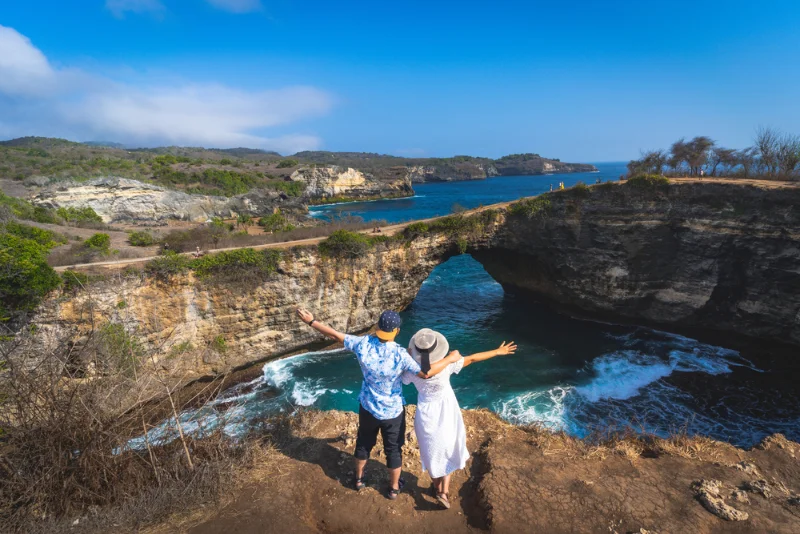
Nusa Penida sits 30 minutes by fast boat from Sanur in southeast Bali, and its landscapes are unlike anything on the main island. Kelingking Beach, a cove framed by a T. rex-shaped limestone headland, is now one of the most photographed spots in all of Indonesia. Crystal Bay has some of the clearest water in the region for snorkelling, with a good chance of seeing manta rays if you're there at the right time. Angel's Billabong, a natural infinity pool carved into the cliff edge, is stunning at low tide.
As a day trip from Bali, Nusa Penida is excellent. As an overnight, it's even better; the island empties of day-trippers after 3 PM and becomes genuinely peaceful.
Best time to visit Nusa Penida: April to October (rough seas in the wet season can make the crossing uncomfortable)
As a day trip from Bali, Nusa Penida is excellent. As an overnight, it's even better; the island empties of day-trippers after 3 PM and becomes genuinely peaceful.
Best time to visit Nusa Penida: April to October (rough seas in the wet season can make the crossing uncomfortable)
5. Jimbaran:
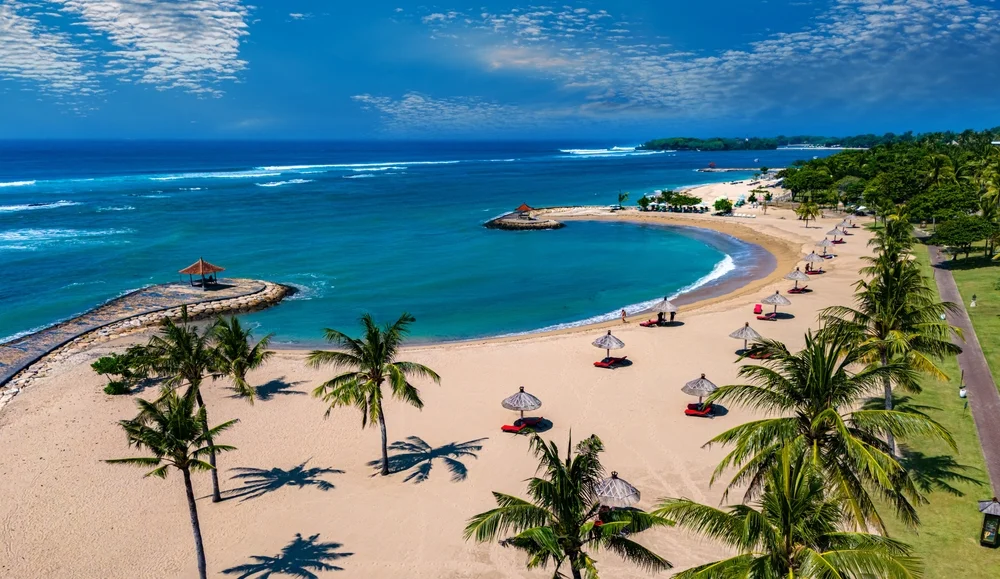
Jimbaran is the place for a romantic beach dinner in Bali, full stop. The bay is calm, the fishing boats bob in the shallows, and a line of outdoor seafood restaurants stretches the length of the beach, grilling their catch of the day (prawns, lobster, fish, squid) over coconut shell charcoal, served with your feet practically in the sand as the sun goes down. It's the kind of meal you describe to people for years.
By day, Jimbaran Bay is good for swimming and sunbathing in a way that Kuta's heavier surf isn't. The Jenggala Gallery, Bali's most respected ceramic studio, is also here, worth a visit for handmade tableware and giftware.
Best time to visit Jimbaran: April to October
By day, Jimbaran Bay is good for swimming and sunbathing in a way that Kuta's heavier surf isn't. The Jenggala Gallery, Bali's most respected ceramic studio, is also here, worth a visit for handmade tableware and giftware.
Best time to visit Jimbaran: April to October
6. Denpasar:
Denpasar is Bali's capital city, and it's the part of Bali most travellers skip entirely, which is their loss. The Bali Museum holds four pavilions of Balinese history, art, and culture going back to the Bronze Age. Pura Jagatnatha, the city's main state temple, is a place of worship rather than a tourist attraction. The Kumbasari and Badung traditional markets are brilliant for fresh produce, local snacks, and the kind of wholesale fabric and craft shopping that Kuta's tourist markets charge three times more for.
Best time to visit Denpasar: April to September
Best time to visit Denpasar: April to September
7. Nusa Lembongan and Nusa Ceningan:
Nusa Lembongan is a small, flat island east of Nusa Penida, connected to the tinier Nusa Ceningan by the famous Yellow Bridge, a rickety suspension bridge wide enough for one motorbike at a time, and a photo everyone takes. Mushroom Bay has the calmest swimming water in the Nusa Islands. Crystal Bay on Nusa Penida, reachable from here, is world-famous for diving and snorkelling. A day trip or overnight stay here is an excellent addition to a Bali vacation package for anyone wanting to slow down mid-trip.
Best time to visit Nusa Lembongan and Nusa Ceningan: May to September
Best time to visit Nusa Lembongan and Nusa Ceningan: May to September
Famous Temples to Visit on a Bali Tour
1. Tanah Lot:
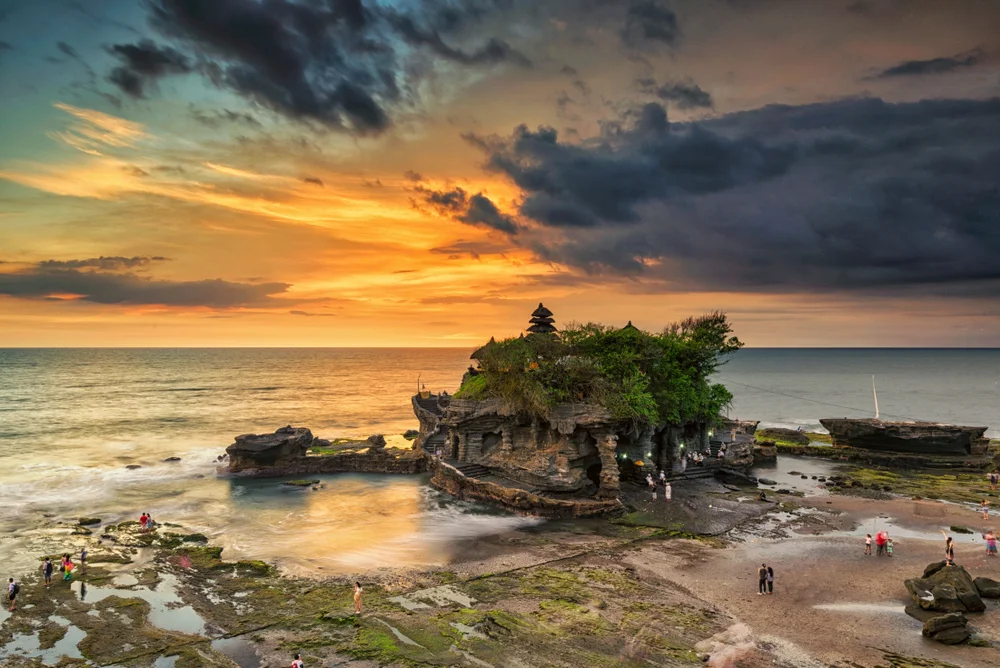
Bali's most photographed temple sits on a large rock formation 100 metres offshore — at high tide it appears to float. Built in the 16th century and dedicated to the sea gods, Tanah Lot is at its most spectacular at sunset, when the silhouette of the temple against the orange sky over the Indian Ocean is genuinely extraordinary. The surrounding area has viewpoints, cafes, and craft stalls. A freshwater spring at the rock's base is considered sacred by locals.
Location: Beraban, Kediri, Tabanan
Timings: 7 AM – 7 PM
Entry: approximately ₹400
Location: Beraban, Kediri, Tabanan
Timings: 7 AM – 7 PM
Entry: approximately ₹400
2. Uluwatu Temple:
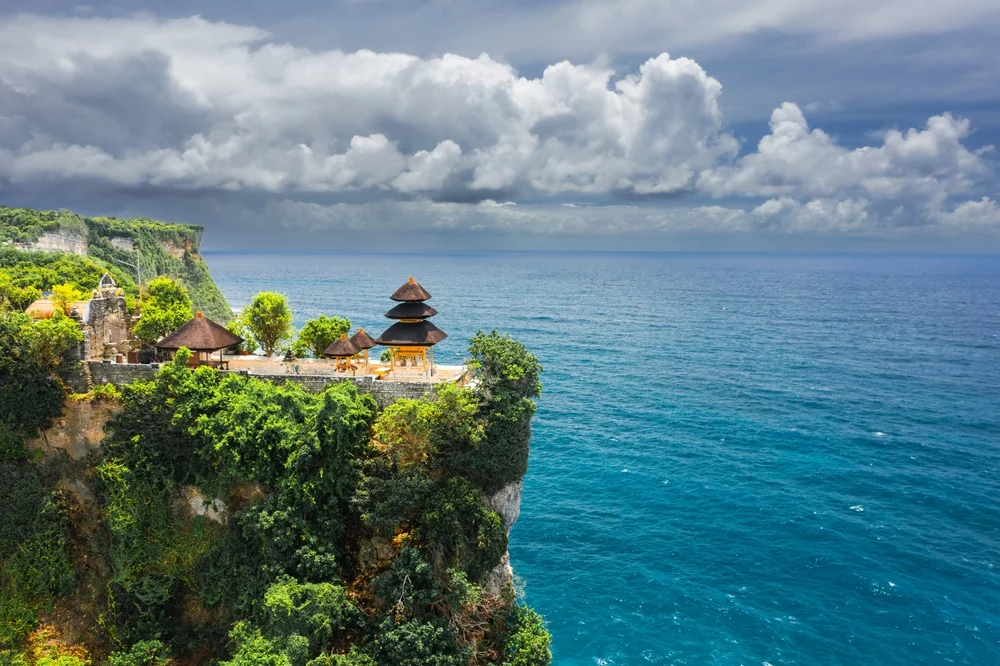
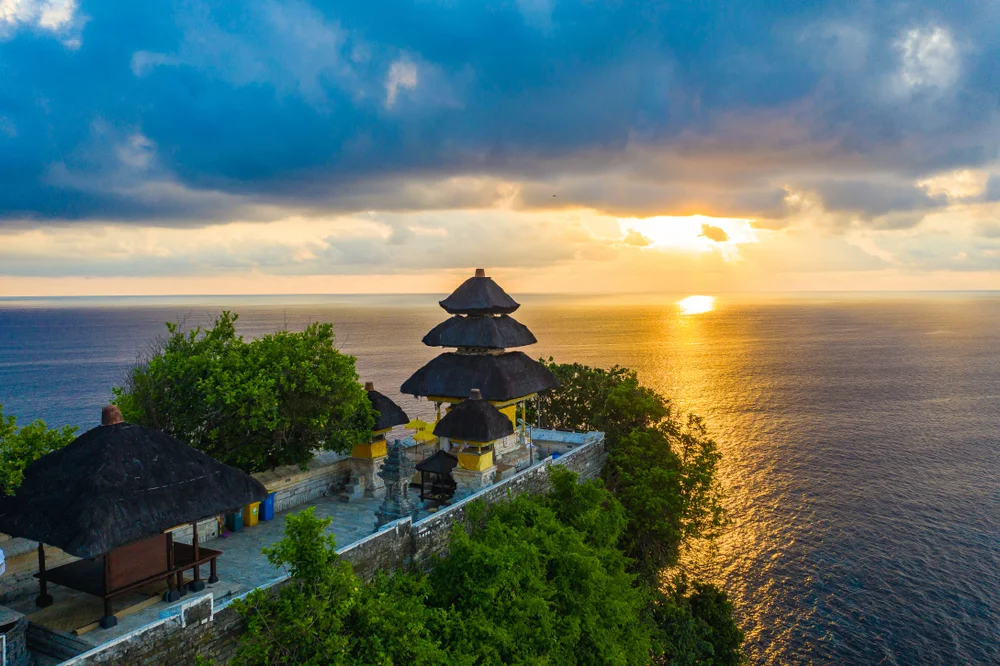
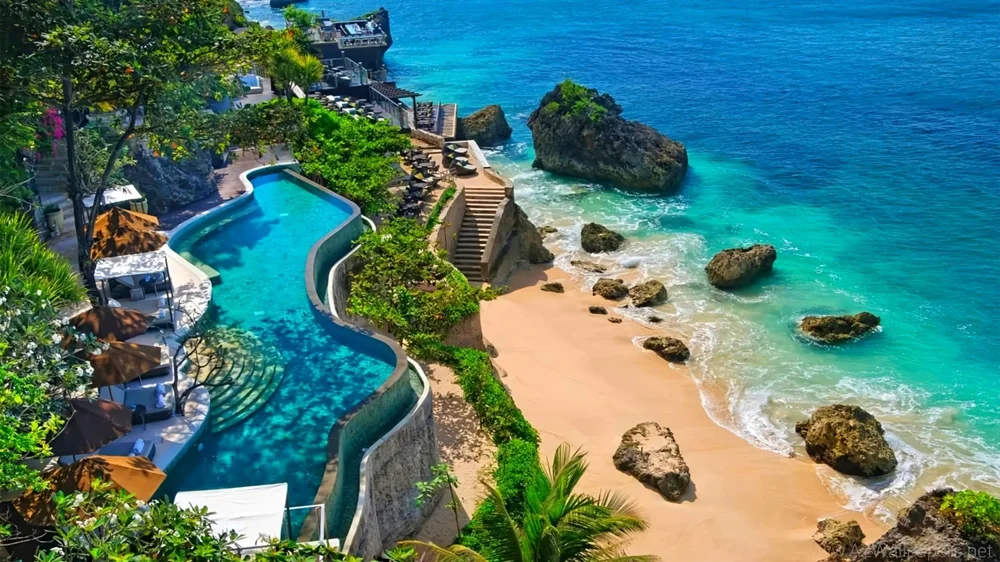
Pura Luhur Uluwatu clings to a cliff 70 metres above the Indian Ocean at Bali's southwestern tip. It's one of Bali's six directional temples, believed to protect the island from evil spirits from the sea. The cliff-edge location is stunning at any time of day, but the real reason to come at sunset is the Kecak fire dance performed in an open-air amphitheatre on the cliff face every evening, 50 to 100 men chanting the story of the Ramayana in hypnotic rounds, with the sunset as the backdrop. One of the genuinely great experiences in all of Bali.
Watch your belongings here, the monkeys at Uluwatu are bolder than those at the Monkey Forest, and more successful thieves.
Location: Pecatu, South Kuta
Timings: 9 AM – 9 PM
Entry: approximately ₹200; Kecak dance: 6 PM daily
Watch your belongings here, the monkeys at Uluwatu are bolder than those at the Monkey Forest, and more successful thieves.
Location: Pecatu, South Kuta
Timings: 9 AM – 9 PM
Entry: approximately ₹200; Kecak dance: 6 PM daily
3. Pura Besakih- the Mother Temple:
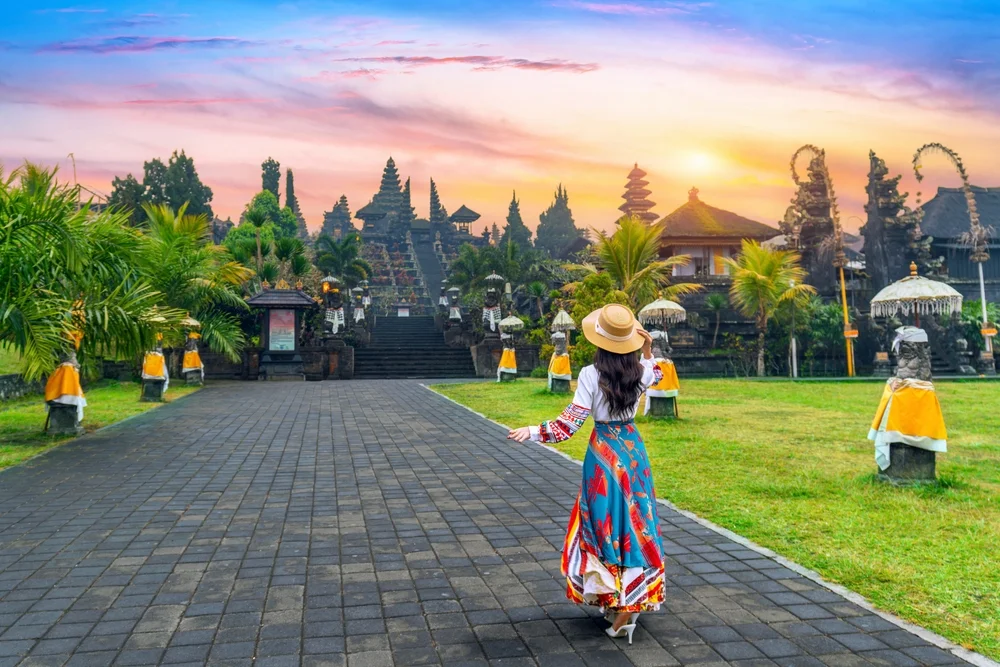
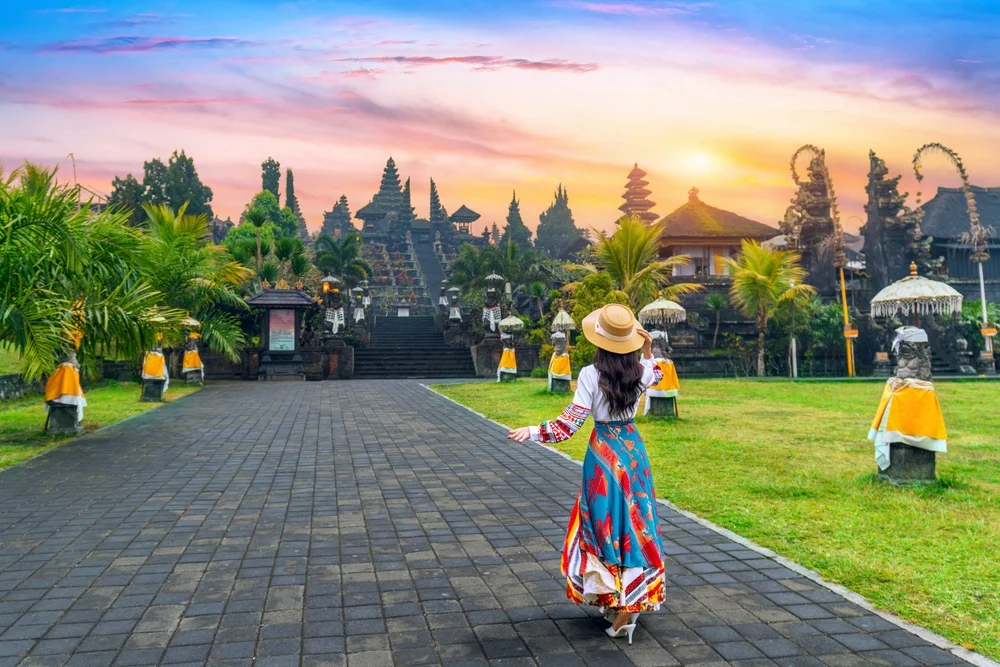
Pura Besakih is Bali's largest and holiest temple complex, built on the slopes of Mount Agung at an elevation of 1,000 metres. The complex consists of 23 separate temples arranged in tiers up the mountain; the main temple, Pura Penataran Agung, is dedicated to the Hindu trinity of Brahma, Vishnu, and Shiva. On festival days, which happen frequently, the complex fills with thousands of worshippers in white and yellow ceremonial dress — a sight unlike anything else on the island.
Location: Besakih, Rendang, Karangasem
Timings: 8 AM – 5 PM
Entry + sarong rental: approximately ₹500
Location: Besakih, Rendang, Karangasem
Timings: 8 AM – 5 PM
Entry + sarong rental: approximately ₹500
4. Tirta Empul Temple:
Built in 962 AD around a sacred freshwater spring, Tirta Empul in the village of Tampaksiring is one of Bali's most spiritually significant temples. The spring-fed pools are arranged in a bathing ritual sequence, 13 spouts, each representing a different purpose: cleansing the spirit, removing illness, and receiving blessings. Hindu Balinese come here regularly for purification. Many Bali tour packages include Tirta Empul as part of a Ubud and Kintamani day; it pairs naturally with a visit to the Tegallalang Rice Terraces.
Location: Tampaksiring, Gianyar
Timings: 8 AM – 6 PM
Entry: approximately ₹200
Location: Tampaksiring, Gianyar
Timings: 8 AM – 6 PM
Entry: approximately ₹200
5. Pura Ulun Danu Beratan:
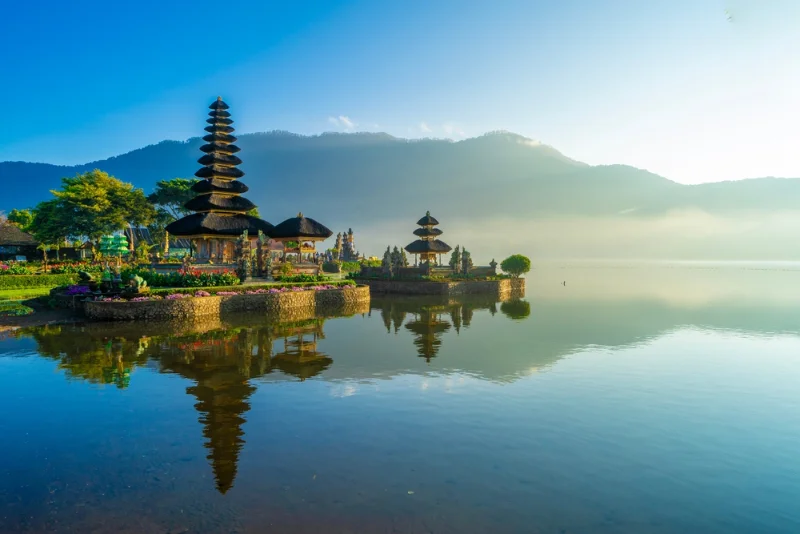
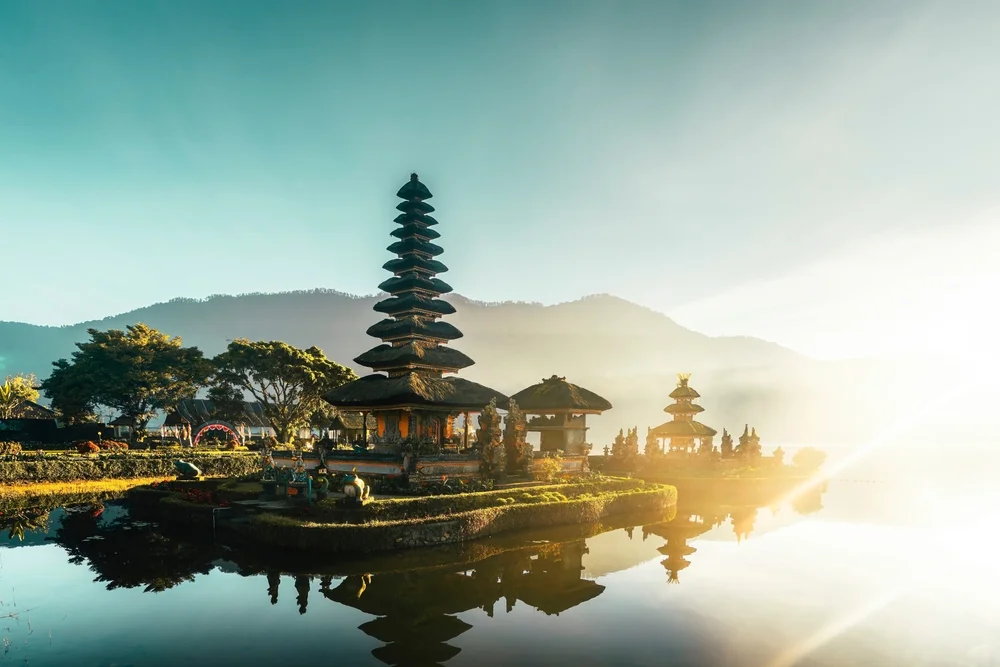
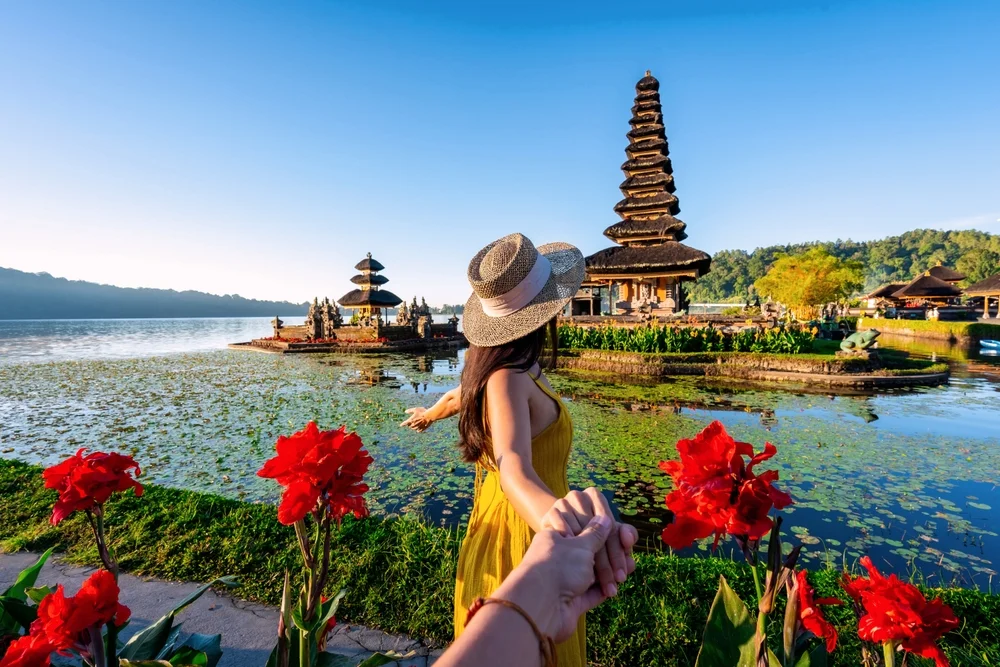
On the shores of Lake Beratan in the Bedugul highlands, this 17th-century water temple dedicated to Dewi Danu (goddess of water) produces the most surreal image in Bali: its multi-tiered pagoda rising from the lake surface, appearing to float when water levels are high. The drive up from south Bali takes about 90 minutes and passes through terraced farmland and cool mountain air, a refreshing contrast to the beach coast. Most Bali travel packages combine Beratan with Tanah Lot and Jatiluwih Rice Terraces on a central Bali day.
Location: Candikuning, Baturiti, Tabanan
Timings: 7 AM – 7 PM
Entry: approximately ₹250
Location: Candikuning, Baturiti, Tabanan
Timings: 7 AM – 7 PM
Entry: approximately ₹250
6. Pura Taman Saraswati, Ubud:
The most charming temple in Ubud, Pura Taman Saraswati, sits at the end of Ubud's main street in a lotus pond garden. Dedicated to Saraswati, the goddess of knowledge and art, it's a natural fit for Ubud's creative character. Traditional Balinese dance performances are held here several evenings a week. Small, free to view from the street, and completely beautiful at dusk.
Location: Jl. Kajeng, Ubud
Timings: Saturday-Thursday 08.00 am until 7.00 pm; Friday 08.00 am until 9.30 pm
Entry: ₹350
Location: Jl. Kajeng, Ubud
Timings: Saturday-Thursday 08.00 am until 7.00 pm; Friday 08.00 am until 9.30 pm
Entry: ₹350
7. Pura Luhur Lempuyang
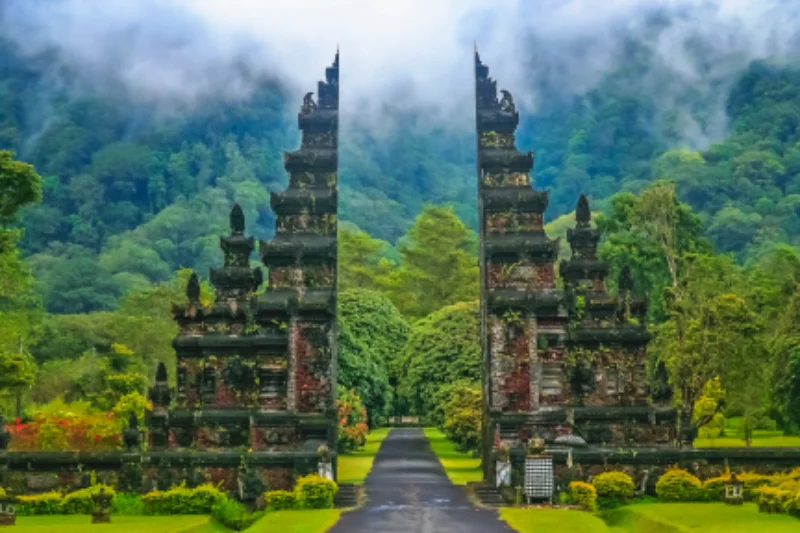
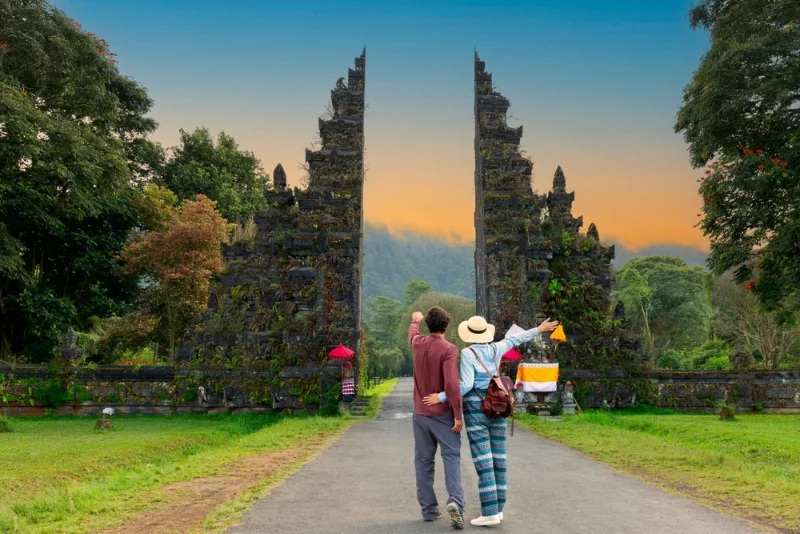
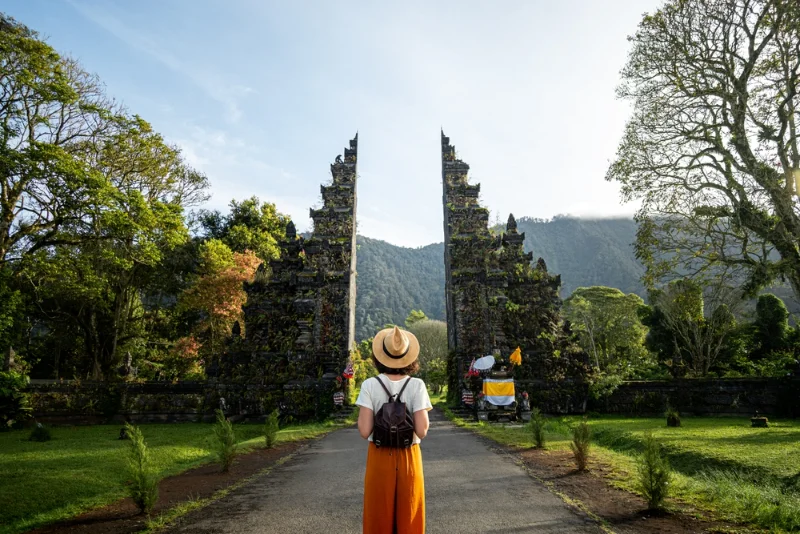
In East Bali, on the slopes of Mount Lempuyang, this temple complex has become famous globally for its split gate, an ancient candi bentar that frames a perfect view of Mount Agung beyond. The photo is everywhere on Instagram. Getting there requires climbing 1,700 steps through dense jungle; the full pilgrimage to the highest of the seven temples takes 3–4 hours. Most visitors come for the gate view at the first temple, which alone is worth the early morning start. Arrive before 8 AM to beat the queues.
Location: Karangasem, East Bali
Timings: 7 AM – 5 PM
Entry: approximately ₹200
Location: Karangasem, East Bali
Timings: 7 AM – 5 PM
Entry: approximately ₹200
Things to Do on Your Bali Trip:
1. Watch Sunset at Tanah Lot:
This is the most iconic activity in Bali, standing on the rocks opposite the temple as the sky turns amber and pink and the waves crash below. Get there at least an hour before sunset (around 5:30 PM in the dry season) to find a good spot. The surrounding viewing areas fill up quickly.
2. Take the Bali Swing Over the Jungle:
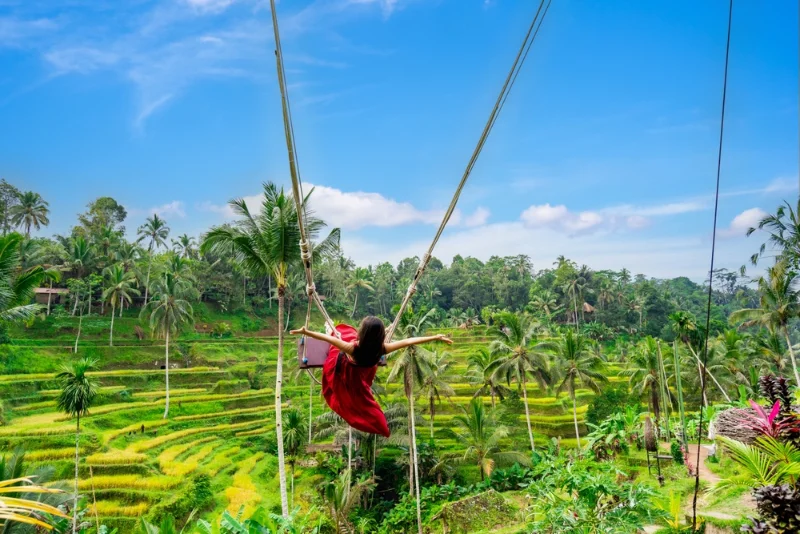
Located near Ubud, the Bali Swing offers multiple platforms from 10 to 78 metres, each sending you on an arc over jungle canopy, rice terraces, and the Ayung River below. You choose your comfort level and adjust. Prices vary by height, ₹2,000–4,500 per person, depending on the platform. Not technically difficult but absolutely thrilling, and the photos are extraordinary.
3. Hike Mount Batur for Sunrise:
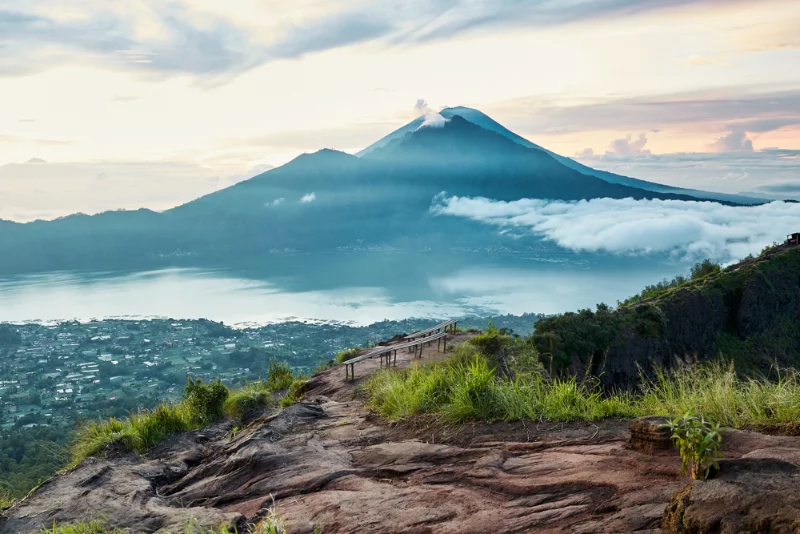
Mount Batur is an active volcano at 1,717 metres, and the hike to its summit is the most popular adventure activity in Bali. Start at 2–3 AM from the village of Kintamani, reaching the summit at sunrise (around 5:30–6 AM) to watch the sun come up over Lake Batur and, on clear mornings, Mount Agung and beyond. The hike takes 2 hours up, 1.5 hours down, and requires a licensed local guide (mandatory, and worth it, the trails split in the dark).
4. Visit Bali Safari & Marine Park:
Set across 40 hectares in Gianyar, the Bali Safari & Marine Park is one of the best full-day family experiences on the island. The safari section takes you by tram through open habitats with Sumatran tigers, white rhinos, orangutans, and other endangered species roaming around you. The Marine Park section has animal shows, a water park, and an Indian restaurant (Tsavo Lion, open daily). Particularly good for families with children aged 5–14.
5. Tour the Tegallalang Rice Terraces:
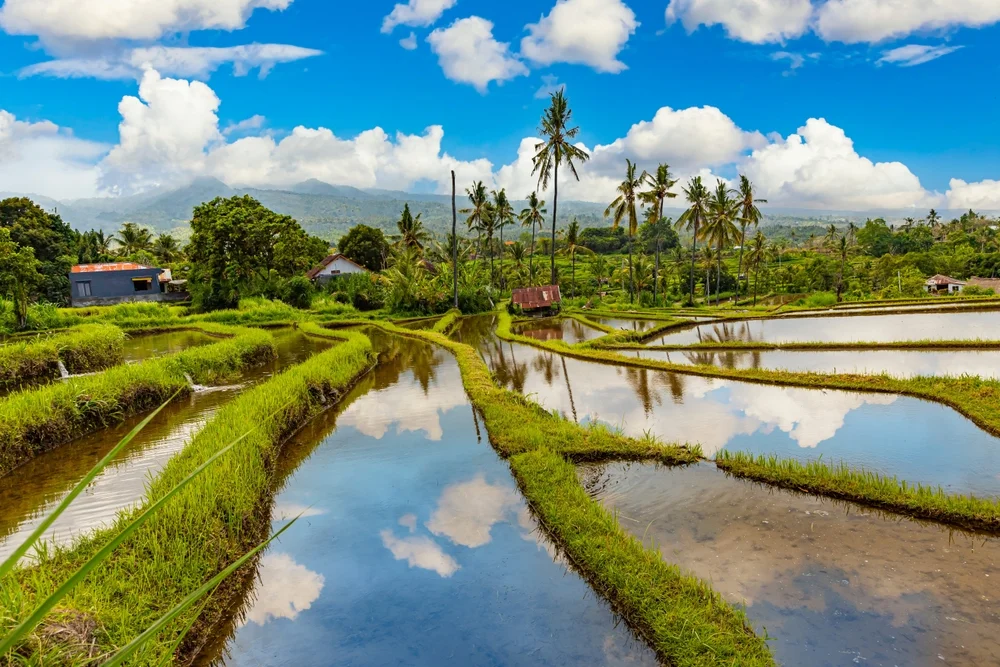
The subak irrigation system at Tegallalang, just north of Ubud, creates layered terraces that cascade down a steep valley in a way that reads as almost architectural. It's a UNESCO-recognised cultural landscape and one of the most photographed spots in Bali. Several cafes overlook the terraces; many also offer the Tegallalang swing (a gentler, cheaper version of the Bali Swing). Budget an hour here as part of a north Ubud day.
6. Explore the Sacred Monkey Forest, Ubud:
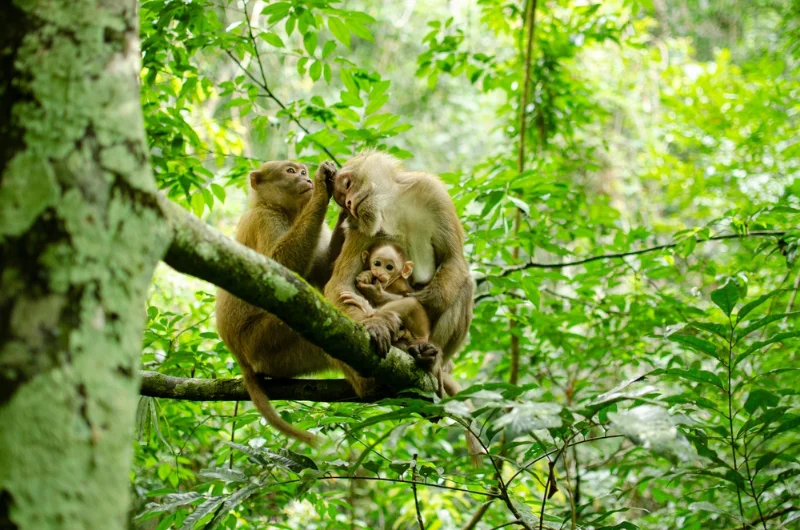
The Sacred Monkey Forest Sanctuary in central Ubud is 12.5 hectares of jungle and an ancient temple complex, home to around 700 Balinese long-tailed macaques. Three temple structures dating from the 14th century are inside the forest. The monkeys are habituated to visitors, curious, and genuinely interactive — but they are wild animals; don't bring food, don't bare teeth, and keep your belongings close. A must for first-time Bali visitors.
7. Discover Goa Gajah (Elephant Cave):
The Elephant Cave near Ubud dates from the 11th century and is a UNESCO World Heritage Site. The cave entrance is carved with an elaborate demon face wide enough to walk through, leading to a small meditation chamber inside. Just outside the cave, six carved stone spouts flow with spring water into a sacred bathing pool. A surprisingly meditative and uncrowded spot compared to Ubud's more famous temples.
8. Swim in the Nungnung Waterfall:
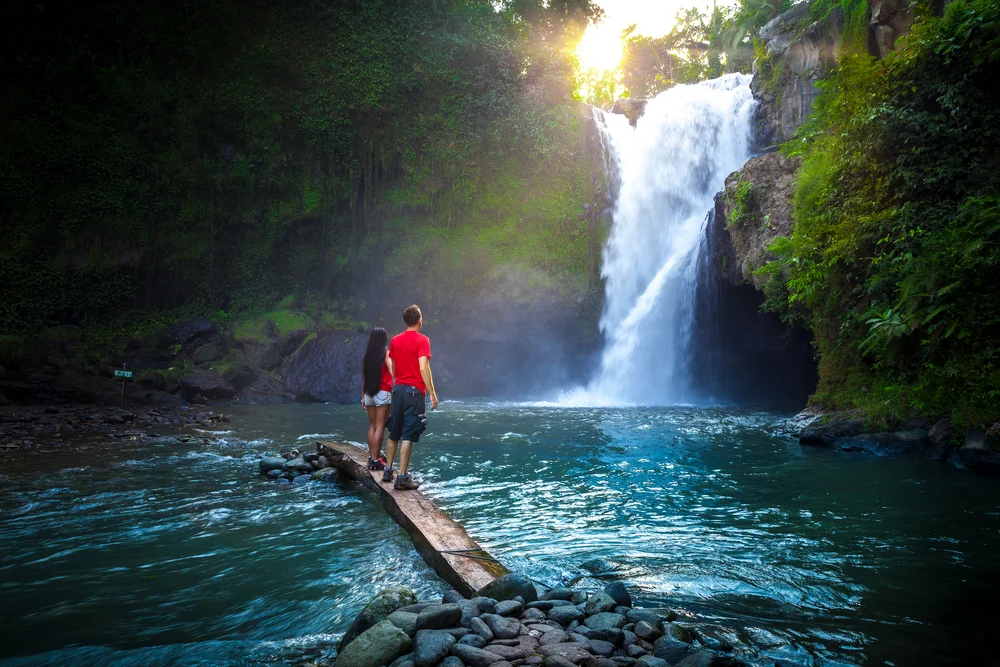
Standing 70 metres tall in the mountains 30 km north of Ubud, Nungnung is Bali's highest waterfall and one of the least-visited by tourists, which is exactly why it's worth going. Getting there involves descending 500 steps through the jungle (plan your legs for the return). The pool at the base is cool and clean, and the spray from the falls reaches you long before you arrive. Best visited in the morning before any afternoon mist moves in.
Adventure Activities in Bali — Beyond the Usual:
If your idea of a Bali trip includes more adrenaline than temple visits, Bali delivers. Here is a dedicated list of adventure activities that Travalot can include in your Bali adventure tour package:
1. White-Water Rafting on the Ayung or Telaga Waja River:
The Ayung River near Ubud and the Telaga Waja in East Bali both offer excellent white-water rafting experiences for beginners and experienced paddlers alike. The Ayung covers 9 km through jungle gorges with Class 2–3 rapids; the Telaga Waja is wilder with Class 3–4 rapids and a longer run. Both trips take roughly 2 hours on the water and include a guide, equipment, meals, and hotel pickup.
Cost: ₹2,500–3,500 per person
Cost: ₹2,500–3,500 per person
2. ATV Quad Biking Through Rice Fields and Jungle:
ATV (quad bike) experiences run through rice paddies, village tracks, and jungle trails in the Ubud area. Most operators offer 1–2 hour routes with varying difficulty. A combination ATV + rafting package is one of the most popular adventure buys in Bali, covering most of a day and typically including hotel transfers, gear, lunch, and insurance.
Cost: ATV only: ₹2,000–3,000 | ATV + Rafting combo: ₹4,000–5,500 per person
Cost: ATV only: ₹2,000–3,000 | ATV + Rafting combo: ₹4,000–5,500 per person
3. Snorkelling and Diving in Nusa Penida:
Crystal Bay on Nusa Penida is one of the best dive sites in Southeast Asia for encountering Mola Mola (oceanic sunfish), which visit the thermocline here between July and October. The waters around Nusa Penida also host manta rays at Manta Point and excellent coral reef diving at sites like SD Point and Gamat Bay. For snorkellers, the shallow reefs around Nusa Lembongan are stunning, with colourful coral, reef sharks, and sea turtles being regular sightings.
Cost of Snorkelling day trip from Bali: ₹2,500–3,500; Diving (2 dives, equipment): ₹5,000–8,000 per person
Cost of Snorkelling day trip from Bali: ₹2,500–3,500; Diving (2 dives, equipment): ₹5,000–8,000 per person
4. Jungle Trekking in Munduk and Sekumpul:
North Bali's interior is dominated by misty highland forests, waterfalls, and coffee and clove plantations. Munduk and Sekumpul are the two most popular trekking areas, multi-hour trails through jungle and farmland, passing a series of waterfalls (Sekumpul is considered Bali's most beautiful). Guided treks from Ubud or from homestays in the north take 3–5 hours, depending on route and fitness.
Cost of Guided trek (including guide, transport): ₹2,000–4,000 per person
Cost of Guided trek (including guide, transport): ₹2,000–4,000 per person
5. Canyoning at Gitgit or Aling-Aling Waterfall:
For travellers who want a water adventure beyond rafting, the Aling-Aling waterfall complex in North Bali offers canyoning, rappelling down waterfall faces, cliff jumping at designated safe points, and sliding down natural water chutes. It's fully guided, safety equipment is included, and the setting is spectacular. Not suitable for non-swimmers; swimming ability required.
Cost: ₹3,000–4,500 per person, including guide and safety gear
Cost: ₹3,000–4,500 per person, including guide and safety gear
6. Parasailing and Water Sports at Tanjung Benoa:
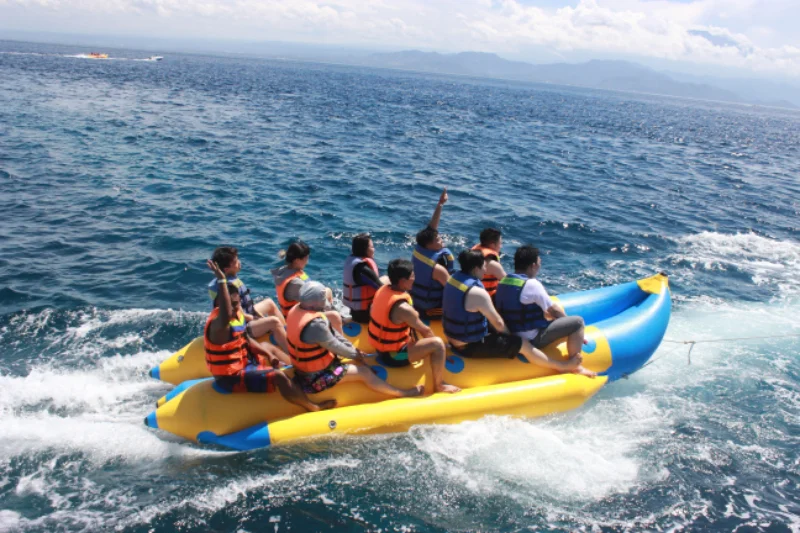
Tanjung Benoa is Bali's official water sports beach, and the menu is comprehensive: parasailing, jet-skiing, banana boat rides, flying fish, sea walking (walking on the seabed in a diving helmet), and glass-bottom boat trips to a nearby turtle island. It's accessible from Nusa Dua and is best for families or groups who want a high-energy beach day.
Cost: Packages from ₹1,500 per person for basic activities; ₹3,500+ for multi-activity combos
Cost: Packages from ₹1,500 per person for basic activities; ₹3,500+ for multi-activity combos
7. Surfing Lessons at Kuta or Canggu:
Kuta's consistent, medium-power beach break is one of the world's most famous beginner surf spots. Surf schools offer 90-minute group lessons with a foam board, a wetsuit, and an instructor, and most beginners are standing up by the end of their first session. Canggu, further north, attracts intermediate and advanced surfers with faster, more powerful waves and a hip surf-cafe culture around its beach clubs.
Cost of Group surf lesson (90 min): ₹1,200–1,800 per person
Cost of Group surf lesson (90 min): ₹1,200–1,800 per person
Bali Entry Requirements for Indian Citizens:
Indian citizens require a Visa on Arrival (VOA) to enter Bali (Indonesia). This is straightforward and widely used by lakhs of Indian travellers every year. Here's exactly what you need to know.
Visa on Arrival: the Most Common Option
The VOA allows a 30-day stay in Indonesia. It can be extended once for an additional 30 days at a local immigration office, giving a maximum stay of 60 days.
Cost: IDR 500,000 (approximately ₹2,700–3,200 per person at current exchange rates)
Two ways to get it:
Option 1: e-VOA (apply online before you fly): Apply through Indonesia's official immigration portal at molina.imigrasi.go.id up to 14 days before your travel date. You'll upload a passport scan and photo, pay online, and receive an approval letter to show at immigration. Strongly recommended, avoids airport queues and gives you peace of mind before boarding.
Option 2: Airport VOA (apply on arrival): Available at the immigration desk at Ngurah Rai International Airport (Denpasar). You pay the fee in cash (USD, IDR) or by card at the counter, your passport is stamped, and you proceed. Allow 20–45 minutes in the queue depending on your arrival time.
Cost: IDR 500,000 (approximately ₹2,700–3,200 per person at current exchange rates)
Two ways to get it:
Option 1: e-VOA (apply online before you fly): Apply through Indonesia's official immigration portal at molina.imigrasi.go.id up to 14 days before your travel date. You'll upload a passport scan and photo, pay online, and receive an approval letter to show at immigration. Strongly recommended, avoids airport queues and gives you peace of mind before boarding.
Option 2: Airport VOA (apply on arrival): Available at the immigration desk at Ngurah Rai International Airport (Denpasar). You pay the fee in cash (USD, IDR) or by card at the counter, your passport is stamped, and you proceed. Allow 20–45 minutes in the queue depending on your arrival time.
Mandatory: All Indonesia Arrival Card (AIAC)
From August 2025, all international visitors must complete the All Indonesia Arrival Card (AIAC) before clearing immigration. This digital form combines customs, health, and immigration declarations and replaces older paper forms. Complete it online at the official Indonesian immigration portal before your flight lands.
Required Documents for Bali Entry
- Valid Indian passport with at least 6 months of validity from your arrival date and at least 2 blank pages
- Passport must be in good physical condition (no water damage, torn pages, or peeling lamination)
- Confirmed return or onward flight ticket (airlines may deny boarding without this)
- Proof of accommodation (hotel booking confirmation)
- Proof of sufficient funds (bank statement or cards showing minimum USD 2,000 equivalent)
- Completed AIAC digital form
- Visa fee payment (IDR 500,000 per person)
Handpicked for you


Couple Retreats
Family Getaways
Wander with Friends



Best International Honeymoon Destinations from Hyderabad for a 5-Day Trip Riddhi Jain
Riddhi Jain20 September, 2026
Hyderabad to Bali: Flights, Visa & Complete Travel GuideRiddhi Jain
Riddhi Jain15 September, 2026
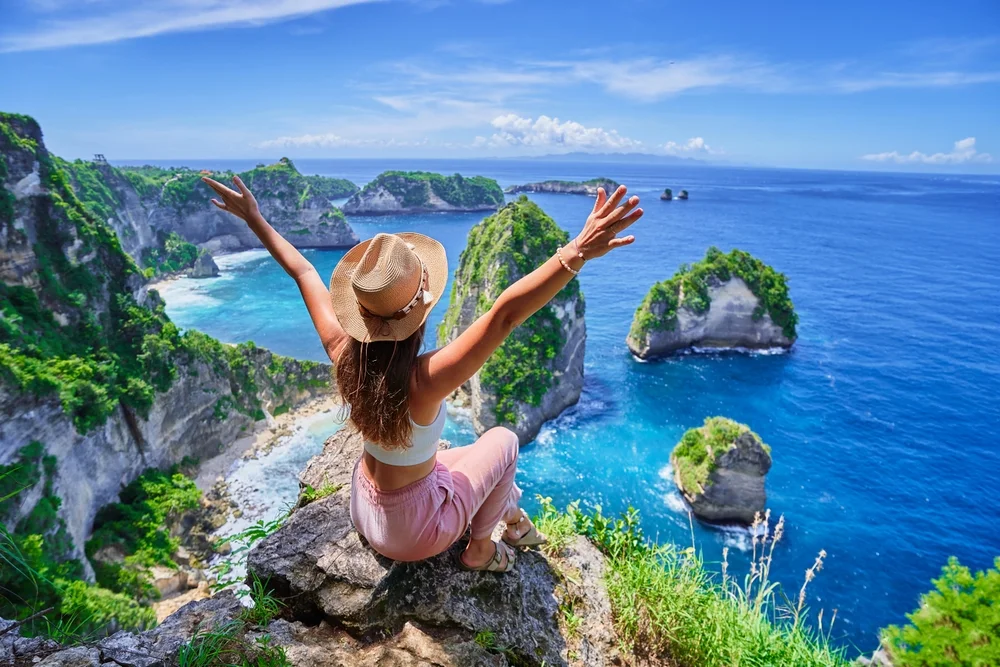
Bali in May: What to Expect, Where to Go & What Not to Miss Sinjini Bhowmick
Sinjini Bhowmick 26 April, 2026




Frequently Asked Questions for Bali
A Bali tour package on our website for a standard duration of 7 days and 6 nights will cost somewhere between 41,000 to 75,000. The Bali trip cost from India entirely depends upon the season you are visiting and the type of overall experience you are looking for.
The prices may go high if you prefer to stay in luxury 5 star properties and seek extravagant experiences. However, the price that you pay covers most of your travel necessities, so that you don’t have to worry much. Travalot offers a number of Bali packages of varied durations to choose from, so hurry up and book your favourite one now!
The cost for a 7-day Bali trip package can vary significantly based on your travel style. For budget travellers, expect to spend around ₹41,000 to ₹50,000, while mid-range travellers may budget ₹56,000 to ₹84,000 for the week.
Luxury travellers can anticipate costs ranging from ₹1,40,000 to ₹2,80,000 or more. These estimates include accommodation, meals, and activities and can fluctuate based on individual preferences and seasonal variations, giving you a general idea of what to expect when booking your Bali packages.
Yes. Indian citizens need a Visa on Arrival (VOA) for Indonesia/Bali. It costs approximately ₹2,700–3,200 (IDR 500,000) per person, allows a 30-day stay, and can be extended once to 60 days. You can apply online as an e-VOA before departure or get it at the airport on arrival. Travalot provides full visa guidance with every Bali package.
Yes, Bali is generally safe for tourists as violent crime is rare. But remember that petty theft, like pickpocketing, can happen, especially in crowded areas. It's important to stay aware of your surroundings and keep your belongings secure.
Health care is good in tourist areas, so having travel insurance is a good idea. Traffic can be chaotic, so if you rent a scooter, wear a helmet and follow local rules. Overall, with basic precautions, you can enjoy a safe trip.
Bali is famous for its charming beaches, rich culture, and beautiful landscapes. Tourists love its vibrant temples, traditional dance performances, and colourful festivals. The island offers various activities, from surfing and diving to yoga retreats and spa treatments.
Bali's delicious cuisine, featuring fresh local ingredients, adds to its charm. Its warm climate, friendly locals, and breathtaking rice terraces make it a top destination for travellers seeking relaxation and adventure.
Choosing between Thailand and Bali depends on what you want from your trip. Thailand is known for its lively street markets, stunning islands like Phuket, and rich cultural experiences. Bali, on the other hand, offers beautiful beaches, unique Hindu temples, and wellness retreats.
If you enjoy nightlife and bustling cities, Thailand might be better for you. If you prefer relaxation and a spiritual atmosphere, Bali could be the perfect choice. Both destinations have their charm and comparing one with the other is completely futile.
The best months to visit Bali are from June to August, during the dry season. During this time, the weather is warm and sunny, making it perfect for outdoor activities like beach lounging, surfing, and exploring.
These months are also popular among tourists, so you can enjoy vibrant nightlife and events. While it can be busier, the beautiful weather and lively atmosphere make it a great time to experience Bali.
Our Bali adventure packages typically include hotel accommodation with daily breakfast, airport transfers, and an adventure activity bundle that can include one or more of the following: white-water rafting (Ayung or Telaga Waja), ATV quad biking, Bali Swing, Mount Batur sunrise trek, snorkelling in Nusa Penida, jungle trekking, and water sports at Tanjung Benoa. If you want you can also ask to add the flights.
For first-time visitors, 5 nights / 6 days is the recommended minimum, enough to see south Bali (Kuta, Seminyak, Uluwatu) and Ubud without feeling rushed. To add Nusa Penida, a volcano trek, or North Bali, plan for 7 nights. 10 nights allows a genuinely comprehensive island experience including the Nusa Islands and time in East or North Bali.
Bali is consistently ranked among Asia's safest tourist destinations. The island receives over 6 million international visitors annually, with a tourist police presence, good hospital infrastructure (BIMC and Siloam hospitals in Kuta accept international insurance), and a deeply hospitable local culture. Solo female travellers regularly rate Bali as one of their most positive experiences. Standard travel precautions apply as anywhere.
Bali uses the Indonesian Rupiah (IDR). As of 2026, ₹1 = approximately IDR 175–190. Exchange rates at money changers in Kuta and Seminyak are significantly better than at the airport; bring a mix of USD (to exchange at good rates in town) and a Visa/Mastercard debit card for ATM withdrawals. Most restaurants, hotels, and larger shops accept cards, but smaller warungs, markets, and local taxis are cash-only.
- Sitara Indian Restaurant, Ubud: One of the most respected Indian restaurants in Bali, Sitara is located near the Coco Market in Ubud and specifically offers Jain food on request. The ambience is elegant with royal-style interiors and terrace seating. Signature dishes include Dal Makhani, Paneer Butter Masala, and Shahi Biryani prepared without onion and garlic when asked.
- Ayodhya Indian Pure Veg & Jain Restaurant, Kuta: A 100% vegetarian Indian restaurant in the heart of Kuta, Ayodhya is purpose-built for Indian travellers with dietary requirements. The dosa and Paneer Masala are particularly recommended by visitors. Staff are experienced with Jain requests.
- Kailash Parbat, Seminyak: A well-known Indian vegetarian chain with a dedicated Jain section. Consistently rated as Bali's most reliable pure veg restaurant, with food that is compliant with Jain dietary rules without having to negotiate with the kitchen.
- Zula Vegetarian Paradise, Seminyak: A plant-based restaurant near Seminyak Beach with clear menu labelling for vegan and Jain options. Staff are experienced with special dietary requests and will confirm ingredient sourcing. Good for breakfasts and light meals.
- Earth Café, Seminyak: An organic café serving vegetarian and vegan dishes using locally sourced ingredients. The menu is naturally Jain-adaptable, no meat, most sauces made from scratch, and staff are responsive to requests to omit onion and garlic.
Bali has an excellent vegetarian food scene, particularly in Ubud and Canggu, which have strong wellness and yoga cultures. Many local warungs (casual Indonesian eateries) serve vegetarian nasi campur and tofu/tempeh dishes by default. Indian food is available in every major tourist area. The only challenge for strict vegetarians is that fish sauce (and occasionally shrimp paste) appears in dishes that look vegetarian, communicate clearly in Indian restaurants, and you'll be well served.
Our most popular honeymoon combination is 3 nights in Ubud (private pool villa with rice terrace views, spa treatment, couples cooking class, Tirta Empul temple visit) followed by 3 nights in Seminyak or Nusa Dua (beachfront resort, Jimbaran beach dinner, Kecak dance at Uluwatu). Bali honeymoon packages from Travalot start from ₹34,499 per person for 5 nights. Call or WhatsApp us to discuss private villa options and upgrades.
Best Bali Packages from India
Bali Tour Packages From DelhiBali Tour Packages From BangaloreBali Tour Packages From MumbaiBali Tour Packages From KolkataBali Tour Packages From AhmedabadBali Tour Packages From HyderabadBali Tour Packages From SuratBali Tour Packages From ChennaiBali Tour Packages From PuneBali Tour Packages From NagpurBali Tour Packages From JaipurBali Tour Packages From KochiBali Tour Packages From Vadodara
Best International Tour Packages
France Tour PackagesCroatia Tour PackagesGreece Tour PackagesSingapore Tour PackagesSwitzerland Tour PackagesTurkey Tour PackagesAustralia Tour PackagesAustria Tour PackagesCzech Republic Tour PackagesDubai Tour PackagesFinland Tour PackagesHungary Tour PackagesIceland Tour PackagesNetherlands Tour PackagesNew Zealand Tour PackagesNorway Tour PackagesPoland Tour PackagesGermany Tour PackagesVietnam Tour PackagesItaly Tour PackagesMauritius Tour PackagesThailand Tour PackagesMalaysia Tour PackagesKenya Tour PackagesJapan Tour PackagesDenmark Tour PackagesSweden Tour PackagesSpain Tour PackagesIndia Tour PackagesMexico Tour PackagesPortugal Tour PackagesMaldives Tour PackagesSouth Africa Tour PackagesSri Lanka Tour PackagesPhilippines Tour PackagesUnited Kingdom Tour PackagesFiji Tour PackagesEurope Tour PackagesSeychelles Tour Packages
Best International Honeymoon Tour Packages
Thailand Honeymoon PackagesBali Honeymoon PackagesSingapore Honeymoon PackagesDubai Honeymoon PackagesMauritius Honeymoon PackagesGreece Honeymoon PackagesSwitzerland Honeymoon PackagesItaly Honeymoon PackagesSri Lanka Honeymoon PackagesJapan Honeymoon PackagesVietnam Honeymoon PackagesMalaysia Honeymoon PackagesMaldives Honeymoon PackagesNorway Honeymoon PackagesFinland Honeymoon PackagesIceland Honeymoon PackagesSpain Honeymoon PackagesCroatia Honeymoon PackagesDenmark Honeymoon PackagesAustralia Honeymoon PackagesSweden Honeymoon PackagesCzech Republic Honeymoon PackagesHungary Honeymoon PackagesGermany Honeymoon PackagesNetherlands Honeymoon PackagesPortugal Honeymoon PackagesPoland Honeymoon PackagesFrance Honeymoon PackagesAustria Honeymoon PackagesEurope Honeymoon PackagesSeychelles Honeymoon Packages
Best International Family Tour Packages
Thailand Family PackagesDubai Family PackagesBali Family PackagesMaldives Family PackagesMalaysia Family PackagesSingapore Family PackagesSwitzerland Family PackagesMauritius Family PackagesSri Lanka Family PackagesGreece Family PackagesItaly Family PackagesNorway Family PackagesVietnam Family PackagesDenmark Family PackagesFinland Family PackagesIceland Family PackagesJapan Family PackagesSweden Family PackagesPhilippines Family PackagesHungary Family PackagesPoland Family PackagesCzech Republic Family PackagesCroatia Family PackagesPortugal Family PackagesAustria Family PackagesSpain Family PackagesGermany Family PackagesNetherlands Family PackagesFrance Family PackagesEurope Family Packages
Discover Bali
Indian Restaurants in Bali Things to Do in Bali On HoneymoonBali Night Markets Things to Do in Bali for AdventurePlaces to Visit in Bali for HoneymoonBeach Clubs in BaliNightlife in Bali Water Parks in BaliBest Things to Eat in BaliPlaces to Visit in Bali with FamilyBest Places For Snorkeling in BaliWater Sports in BaliSites for Scuba Diving in BaliRestaurants in BaliBeaches in BaliThings to Buy in BaliBest Places to Visit in BaliThings to do in BaliBali Visa for Indians