
15
Festivals in Sri Lanka

Festivals in Sri Lanka
The festivals in Sri Lanka represent a dazzling mosaic of spiritual zeal, offering travellers a profound opportunity to witness the "Living Soul" of the island: its devotion, its artistry, and its communal harmony. This teardrop-shaped island in the Indian Ocean occupies a monumental space in the global cultural psyche, housing some of the most ancient and continuous religious celebrations in Asia. Exploring these events is more than just observing a parade; it is an immersion into sacred landscapes where nature and history often intertwine, such as the rituals performed amidst 2,000-year-old civilisations.
Witness the Sinhala New Year, Vesak, or Poson Poya, all offering cultural importance to different sections of the country. As you traverse these festive spaces in 2026, you’ll encounter everything from fire-walkers and rhythmic drummers to golden caskets and traditional delicacies. With world-class guiding and specialised festival travel packages, Sri Lanka stands as a premier destination for those seeking an authentic, soulful journey through time and tradition.
Sri Lankan Festivals to Celebrate
01
Sinhala New Year (Aluth Avurudda)
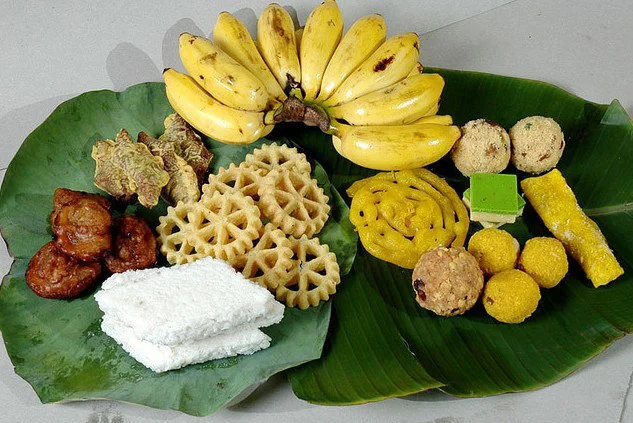
The Sinhala and Tamil New Year, occurring in mid-April, marks the sun’s transition from Pisces to Aries. It is the nation’s most significant cultural event, symbolising the end of the harvest season. Unlike many global celebrations, this festival follows a specific astrological "Nonagathe" (neutral period), where all work stops, and people focus on religious activities before the new year officially dawns. This is a premier example of festivals in Sri Lanka that unite the entire population across ethnic lines.
The celebration is defined by traditional rituals performed at "auspicious times". This includes lighting the hearth, boiling milk in a new clay pot until it overflows (symbolising prosperity), and the first meal of the year. Popular "Avurudu" games like Kotta Pora (pillow fighting) and Kana Mutti (breaking clay pots) take place in every village.
Where to Celebrate:
While celebrated island-wide, the most authentic experiences are in rural villages in regions like Anuradhapura, Kurunegala, or the Cultural Triangle.
02
Vesak Festival
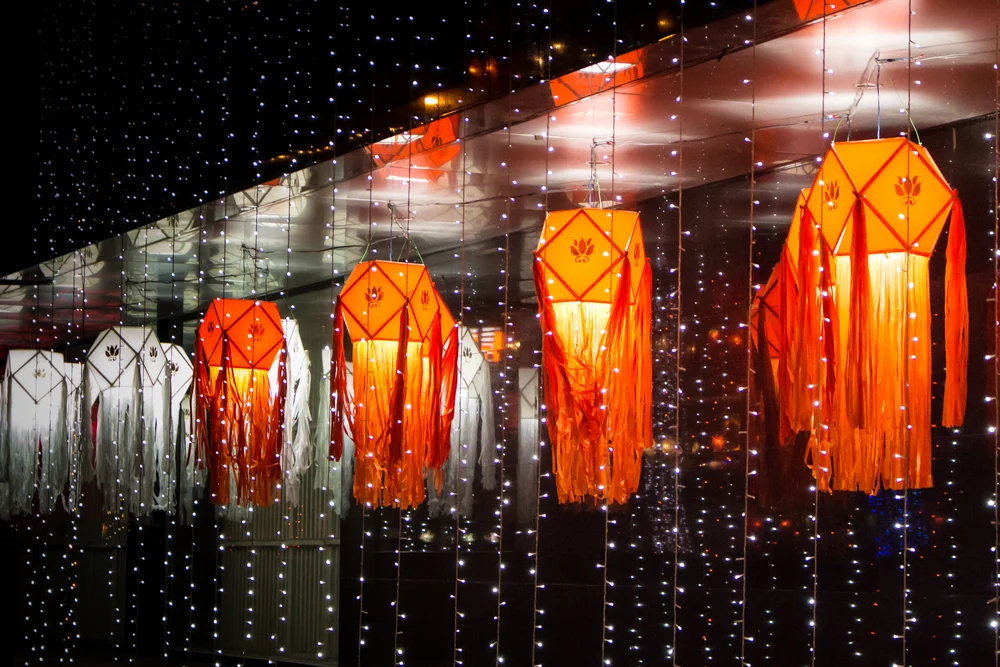
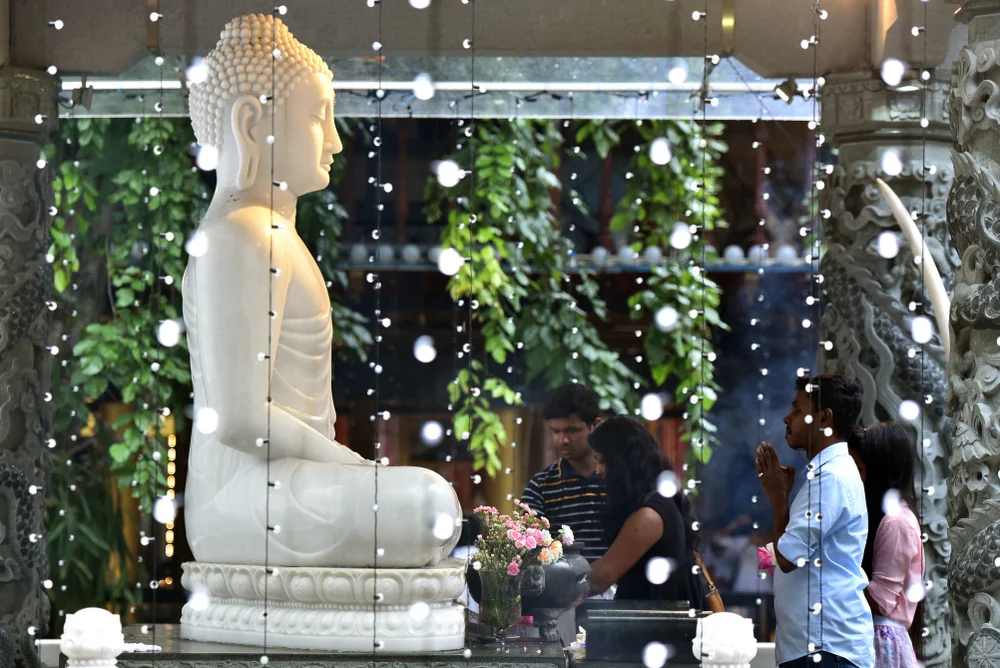
Vesak is the most sacred day for Buddhists, commemorating the birth, enlightenment, and passing (Parinirvana) of Lord Buddha. This full moon day in May transforms the island into a luminous wonderland. It is a time of "Amisa Puja" (visual offerings) and "Prathipaththi Puja" (spiritual practice). As one of the most visually stunning festivals in Sri Lanka, it emphasises compassion and light.
The streets are adorned with "Vesak Kudu" (intricate paper lanterns) and massive "Thorana" (illuminated pandals) that depict Jataka stories through thousands of colourful bulbs. A unique highlight is the Dansala, where locals set up stalls to give away free food, ice cream, and drinks to passersby, embodying the spirit of Buddhist charity.
Where to Celebrate:
Colombo (around Beira Lake and the Gangarama Temple) offers the grandest displays, while Kandy provides a more serene, traditional atmosphere.
Best Selling Sri Lanka Tour Packages for Couples
03
Poson Poya
Poson Poya, held in June, celebrates the introduction of Buddhism to Sri Lanka in the 3rd century BCE by Arahat Mahinda, the son of Emperor Ashoka. It is considered the second most important Buddhist festival. The focus is on the hill of Mihintale, where the historic meeting between Arahat Mahinda and King Devanampiyatissa occurred.
The main highlight is the massive pilgrimage to Mihintale. Thousands of devotees dressed in white climb the 1,840 stone steps to the summit. The entire mountain and the surrounding stupas are brilliantly illuminated. Like Vesak, many Dansalas are organised to provide food to the weary pilgrims.
Where to Celebrate:
The epicentre is Mihintale and the ancient city of Anuradhapura. The atmosphere here is deeply spiritual and communal.
04
Esala Perahera
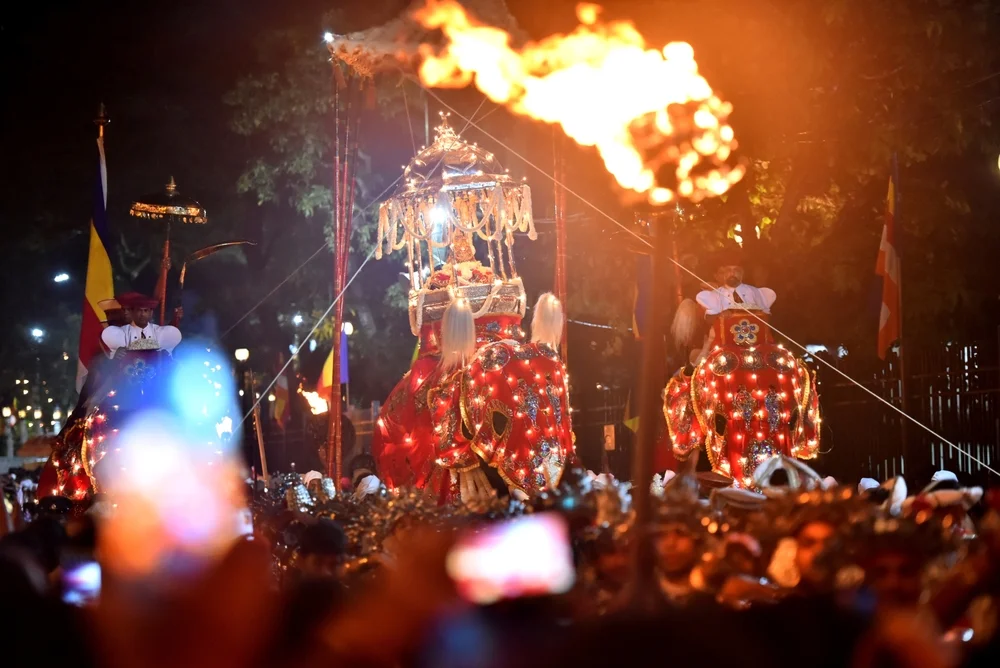
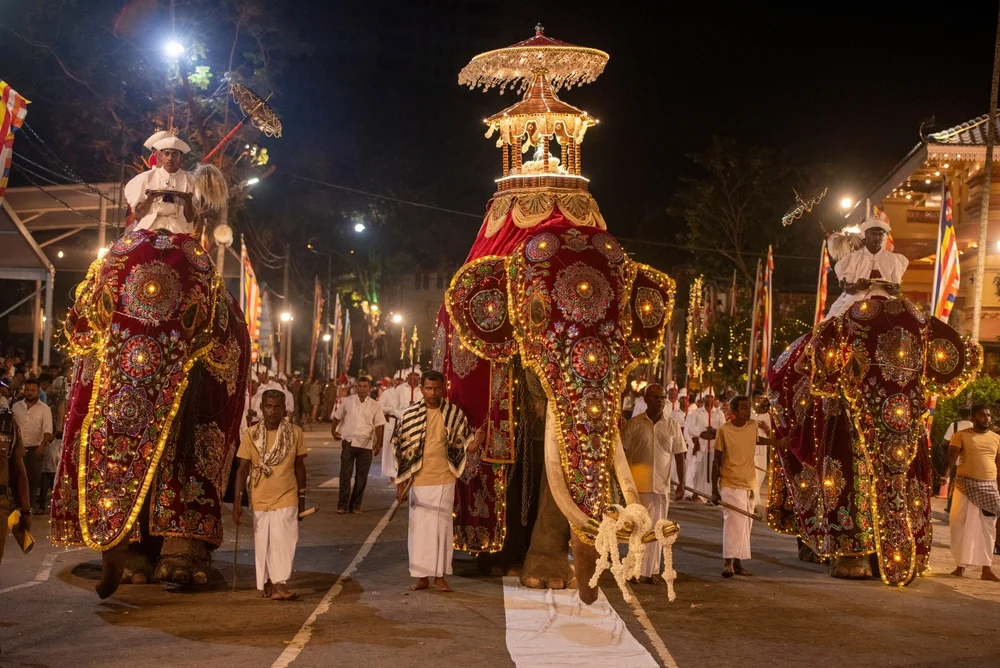
Often called the "Grand Festival of Asia", the Esala Perahera in Kandy is a ten-day pageant held in July or August to honour the Sacred Tooth Relic of the Buddha. This is arguably the most famous of all festivals in Sri Lanka for international travellers, blending ancient royalty with religious fervour.
The procession is a sensory overload featuring hundreds of Kandyan dancers, whip-crackers, fire-jugglers, and drummers. The star of the show is the Maligawa Tusker, a majestic elephant draped in gold-stitched silk, carrying the golden casket containing the relic. The nightly parades grow in size and grandeur, culminating in the "Randoli Perahera".
Where to Celebrate:
Exclusively in the hill capital, Kandy. Securing a seat along the street route or a balcony is essential for the best view.
Best Selling Sri Lanka Family Packages
05
Navam Perahera
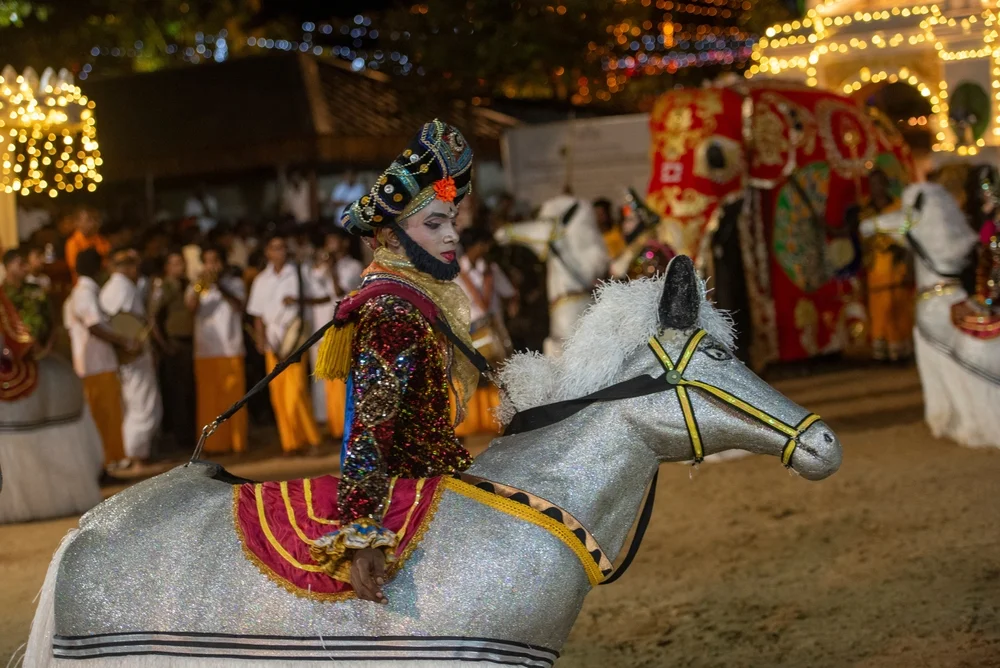
The Navam Perahera, held on the February full moon, was established in 1979 by the Gangaramaya Temple in Colombo. It aims to revive traditional art forms and celebrate the appointment of the Buddha's chief disciples, Sariputta and Moggallana. It has quickly become a major urban cultural highlight.
The parade features over 50 elephants and nearly 1,000 performers from across the country. You will see various dance styles, from the acrobatic Low Country dances to the dignified Kandyan steps. The sight of decorated elephants marching through the modern skyscrapers of Colombo creates a stunning contrast.
Where to Celebrate:
The procession takes place around the Gangaramaya Temple and the scenic Beira Lake in the heart of Colombo.
06
Duruthu Perahera
Held in January, the Duruthu Perahera marks the first of three visits by the Buddha to Sri Lanka. It specifically commemorates his visit to Kelaniya, where he reconciled two warring factions of the Naga tribe. This event kicks off the annual cycle of major festivals in Sri Lanka.
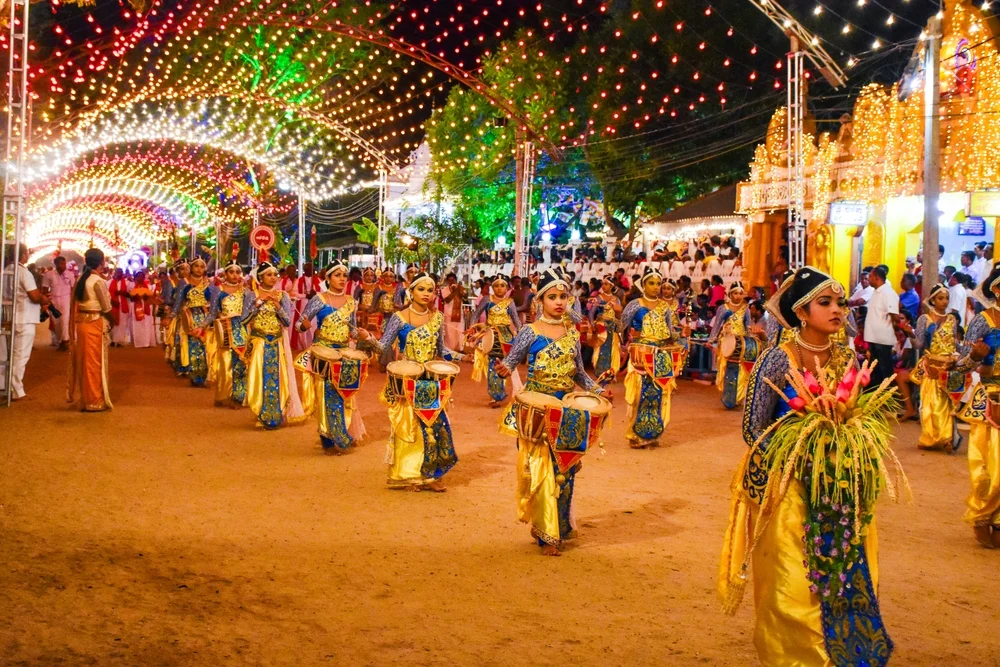
The festival consists of three nights of processions: the Udahalu Perahera, the Pahathahelu Perahera, and the final Randoli Perahera. It features traditional dancers, musicians, and elephants, though it is slightly more intimate than the Kandy pageant. It is a fantastic way to see high-quality traditional dance without the massive crowds of later festivals.
Where to Celebrate:
At the Kelaniya Raja Maha Vihara, located just outside Colombo.
Sri Lanka Packages For A Friend's Trip
07
Kataragama Festival
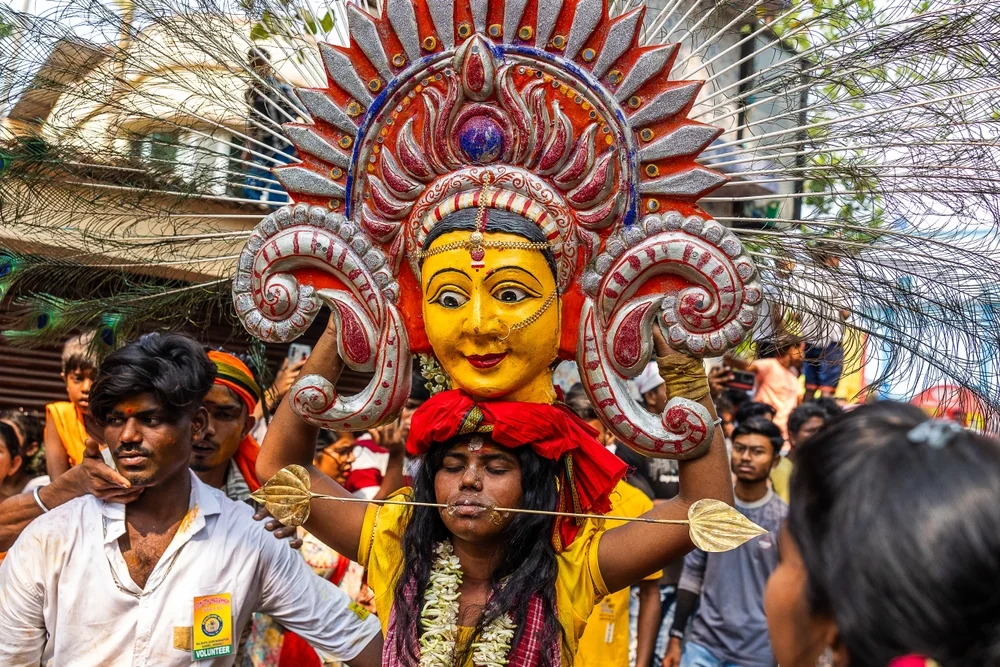
This festival is a unique bridge between religions, dedicated to the God Skanda (Murugan). It attracts Buddhists, Hindus, Muslims, and the indigenous Vedda people. Held in July/August, it is a raw, powerful display of faith that involves intense acts of penance.
The festival is famous for its "Kavadi" dancers who carry arched frames decorated with peacock feathers. Some devotees perform extreme acts of devotion, such as fire-walking or piercing their bodies with silver hooks. The final "water cutting" ceremony at the Menik Ganga river marks the end of the festivities.
Where to Celebrate:
In the holy jungle town of Kataragama, in the southeastern part of the island.
08
Nallur Festival
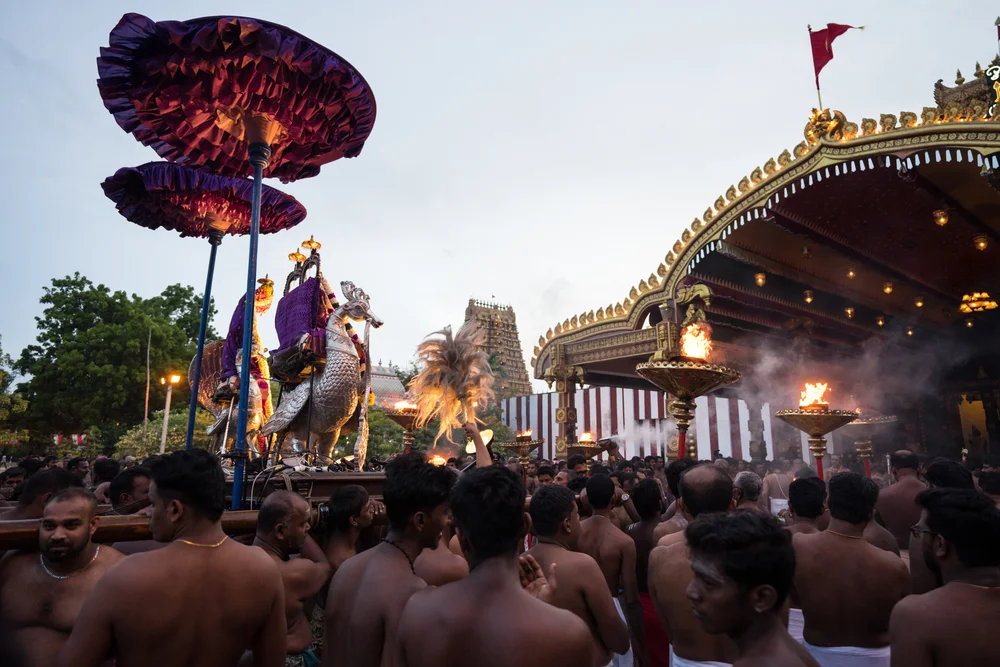
The Nallur Kandaswamy Kovil festival in Jaffna is the longest and most significant Hindu festival on the island, lasting 25 days. Dedicated to Lord Murugan, it is a display of northern Tamil culture and religious discipline. It is a standout among festivals in Sri Lanka for its austerity and precision.
The festival features different chariot processions daily. Men must enter the temple premises bare-chested as a sign of respect. The sight of the massive, intricately carved silver chariot being pulled by thousands of devotees chanting "Haro Hara" is unforgettable. The atmosphere is orderly, peaceful, and deeply devout.
Where to Celebrate:
At the Nallur Kandaswamy Kovil in Jaffna.
09
Thai Pongal
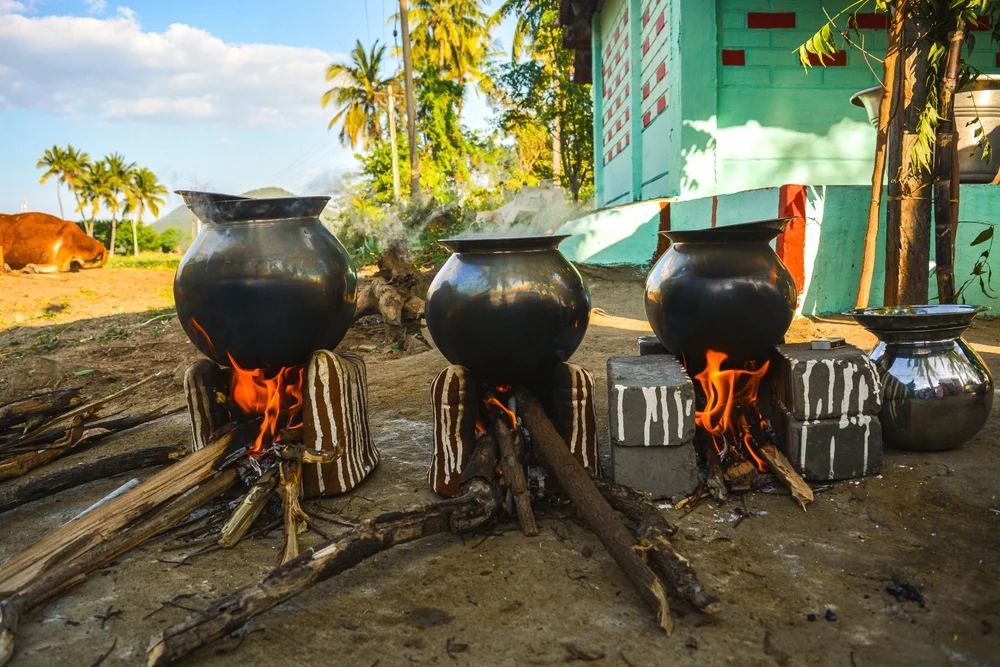
Thai Pongal is a Hindu harvest festival celebrated in mid-January. It is a day of thanksgiving to the Sun God, Surya, and the farm animals (cattle) that help provide a bountiful harvest. It is a beautiful celebration of nature’s bounty and a staple among the agricultural festivals in Sri Lanka.
Families gather at dawn to cook "Pongal"—a sweet rice dish made with new harvest rice, jaggery, and milk. As the milk boils over the pot, everyone shouts "Pongalo Pongal!" to signify prosperity. Homes are decorated with Kolam (intricate floor art made of rice flour) and colourful garlands.
Where to Celebrate:
The most vibrant celebrations are in the tea plantations of the Hill Country (Hatton, Nuwara Eliya) and the Northern and Eastern provinces.
10
Vel Festival
The Vel Festival, held in July or August, celebrates the victory of Lord Murugan over evil forces using his "Vel" (sacred spear). It is a major event for the Hindu community in the capital, often coinciding with the Kataragama festival. It remains one of the most colourful urban festivals in Sri Lanka.
An ornate, silver-plated chariot carrying the statue of Lord Murugan and his Vel is paraded through the streets of Colombo. The chariot is accompanied by musicians playing the nadaswaram (oboe-like instrument) and thavil (drums). Devotees smash coconuts on the ground as the chariot passes to symbolise the shattering of the ego.
Where to Celebrate:
The procession usually travels between the Pettah and Bambalapitiya areas in Colombo.
11
Unduvap Poya
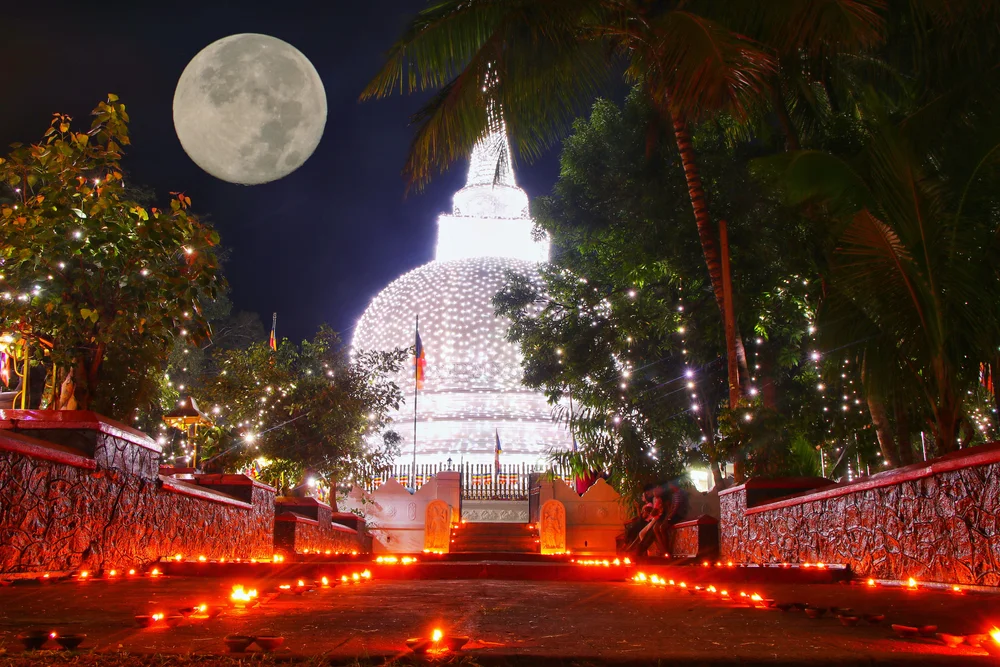
Celebrated in December, Unduvap Poya commemorates the arrival of Sangamitta Theri, the daughter of Emperor Ashoka, in Sri Lanka. She brought with her a sapling of the sacred Bodhi Tree under which the Buddha attained enlightenment. This sapling was planted in Anuradhapura and remains the oldest documented tree in the world.
This Poya marks the start of the Sri Pada (Adam’s Peak) pilgrimage season. Thousands of people begin the midnight trek up the mountain to reach the summit by dawn. In Anuradhapura, thousands of devotees gather at the Jaya Sri Maha Bodhi to offer milk, rice and flowers in a serene, white-clad assembly.
Where to Celebrate:
The Jaya Sri Maha Bodhi in Anuradhapura and the foothills of Adam’s Peak.
12
Maha Shivratri
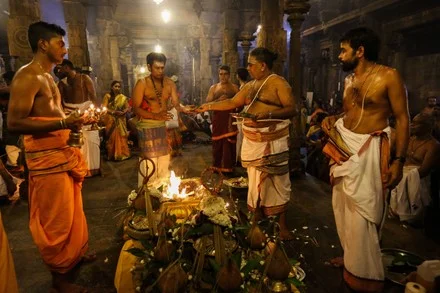
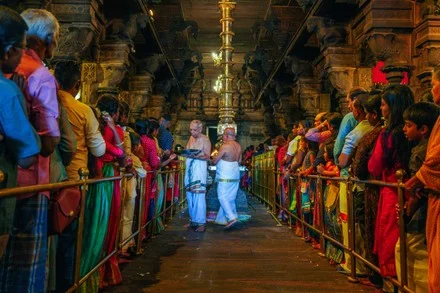
Maha Shivratri, the "Great Night of Shiva", is a solemn Hindu festival dedicated to Lord Shiva. It marks the night when Shiva performed the "Tandava" (cosmic dance). Among the diverse festivals in Sri Lanka, this one focuses on introspection, fasting, and overcoming darkness and ignorance.
Devotees observe a strict fast throughout the day and stay awake all night in prayer and meditation. Special "Pujas" are performed at temples where the Shiva Lingam is bathed in milk, honey, and water. Chants of "Om Namah Shivaya" resonate through the night, creating powerful, meditative vibrations.
Where to Celebrate:
The "Pancha Ishwarams" (five ancient Shiva temples), including Munneswaram in Chilaw and Koneswaram in Trincomalee, are the prime locations.
13
Deepavali
Deepavali, the Festival of Lights, is celebrated by Hindus worldwide to mark the victory of light over darkness and good over evil. In the Sri Lankan context, it is a time for family reunions, new beginnings, and vibrant home decorations. It is one of the most heartwarming festivals in Sri Lanka.
Homes are illuminated with "diyas" (clay oil lamps) and decorated with colourful Kolam designs. People wear new clothes and exchange "Mishti" (sweets) like laddu and jalebi with neighbours. Fireworks are common in the evening, symbolising the joy of the triumph of righteousness.
Where to Celebrate:
The Hill Country tea estates and the Tamil-dominated areas of Colombo (Wellawatte) and Jaffna.
14
Christmas
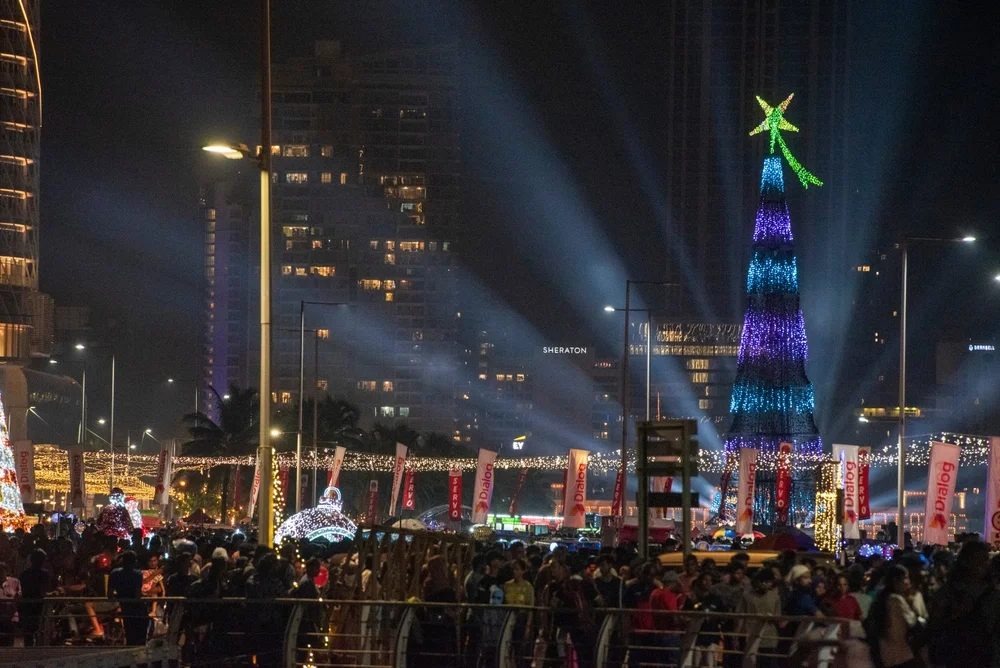
While Christians are a minority, Christmas is a massive public celebration. It reflects the colonial influences of the Portuguese, Dutch, and British. It is a time when the island’s hospitality shines, as non-Christians often join in the festivities, making it one of the most inclusive festivals in Sri Lanka.
Cities like Colombo and Negombo are transformed with massive Christmas trees and street lights. A unique tradition is the "Christmas Cake", which is a rich, fruit-heavy cake unique to the island. Midnight Mass on Christmas Eve is a significant event, often followed by firecrackers that light up the tropical sky at midnight.
Where to Celebrate:
Negombo (often called "Little Rome") and the shopping hubs of Colombo.
15
Eid al-Fitr
Eid al-Fitr marks the end of Ramadan, the holy month of fasting. It is a time of joy, charity, and gratitude for the Muslim community. Among the many festivals in Sri Lanka, Eid is best known for its incredible food and the spirit of "Zakat" (charity) that sees wealth shared with the less fortunate.
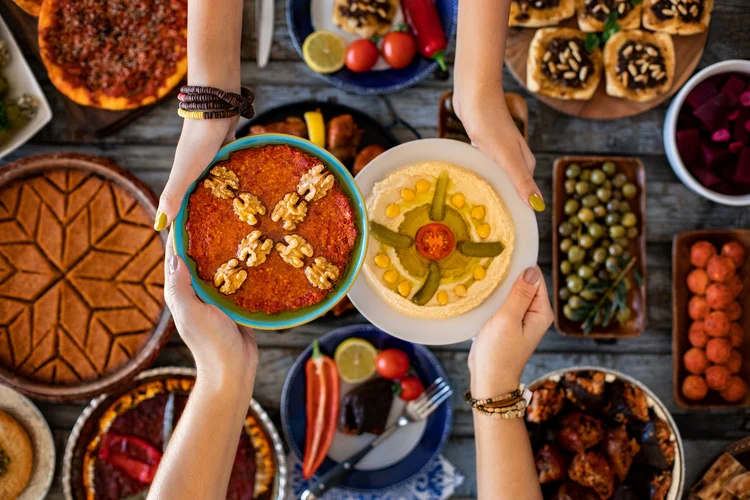
The day begins with communal prayers at mosques or open "Eidgah" grounds. The most famous highlight is the "Biryani" and "Watalappam" (a spiced coconut custard) shared among friends and family of all faiths. The atmosphere is one of brotherhood and celebration after a month of spiritual discipline.
Where to Celebrate:
Colombo, Galle Fort, and the eastern town of Kattankudy are vibrant centres of Eid celebration.
Explore Sri Lanka
Frequently Asked Questions for Sri Lanka
The most famous festivals in Sri Lanka include the Sinhala and Tamil New Year in April, which is the national cultural highlight, and the Kandy Esala Perahera in August, a massive Buddhist procession. Vesak (May) is also globally renowned for its incredible light displays and lanterns.
The Kandy Esala Perahera is the ultimate event for photographers, offering shots of fire dancers, decorated elephants, and traditional drummers. The Nallur Festival in Jaffna and the Vesak lantern displays in Colombo also provide stunning, high-contrast visual opportunities that capture the island’s deep spiritual and artistic vibrancy.
Hindus in Sri Lanka celebrate several major events, including Thai Pongal (harvest), Maha Shivratri (dedicated to Lord Shiva), and Deepavali (festival of lights). The Nallur Festival in Jaffna and the Vel Festival in Colombo are also significant, featuring large chariot processions and vibrant temple rituals.
Absolutely! During the New Year, try Kiribath (milk rice) and sweets like Kavum and Kokis. For Vesak, look for Dansala food like free lentil curry. During Eid, Watalappam is a must, while Hindu festivals offer delicious sweet Pongal rice and various vegetarian "vades".
Travellers can witness the island transform into a "festival of lights" with thousands of handmade paper lanterns. You can explore giant "Thoranas" (illuminated storyboards), visit temples to see devotees in white, and participate in Dansalas, where locals offer free food and drinks to everyone as an act of merit.
To see the most authentic culture, the Sinhala and Tamil New Year and the Esala Perahera are the best festivals in Sri Lanka. The New Year showcases village games and culinary traditions, while the Perahera displays the island’s ancient Kandyan dance, drumming, and royal processional heritage.
Discover Sri Lanka
Popular Attractions of Sri Lanka
Galle Face Beach, GalleRavana Caves, EllaNine Arches Bridge, EllaGalle FortNational Maritime Museum, GalleGalle LighthouseBundala National ParkKandy Lake, Sri LankaCeylon Tea Museum, KandyWales Park, KandyNational Museum, KandyUdawattekele Sanctuary, KandyVictoria ParkLovers Leap Waterfall, Nuwara EliyaHorton Plains National ParkRoyal Botanic Gardens, KandyMirissa BeachSigiriya Rock FortressYala National ParkUdawalawe National Park
Monthly Travel Guides
Sri Lanka In January Travel Guide Best Experience HighlightsSri Lanka In February Weather Beaches ExperiencesSri Lanka In March Weather Places To Visit Travel GuideSri Lanka In April Best Places To Visit Things To DoSri Lanka In May The Complete Travel GuideSri Lanka In June Weather Places Travel TipsSri Lanka In July Best Experiences Weather Packing TipsVisit Sri Lanka In August Weather Attractions Holiday Planning GuideSri Lanka In September Complete Travel Guide 2026
Best International Tour Packages
France Tour PackagesBali Tour PackagesCroatia Tour PackagesGreece Tour PackagesSingapore Tour PackagesSwitzerland Tour PackagesTurkey Tour PackagesAustralia Tour PackagesAustria Tour PackagesCzech Republic Tour PackagesDubai Tour PackagesFinland Tour PackagesHungary Tour PackagesIceland Tour PackagesNetherlands Tour PackagesNew Zealand Tour PackagesNorway Tour PackagesPoland Tour PackagesGermany Tour PackagesVietnam Tour PackagesItaly Tour PackagesMauritius Tour PackagesThailand Tour PackagesMalaysia Tour PackagesKenya Tour PackagesJapan Tour PackagesDenmark Tour PackagesSweden Tour PackagesSpain Tour PackagesIndia Tour PackagesMexico Tour PackagesPortugal Tour PackagesMaldives Tour PackagesSouth Africa Tour PackagesPhilippines Tour PackagesUnited Kingdom Tour PackagesFiji Tour PackagesEurope Tour PackagesSeychelles Tour Packages
Best International Honeymoon Tour Packages
Thailand Honeymoon PackagesBali Honeymoon PackagesSingapore Honeymoon PackagesDubai Honeymoon PackagesMauritius Honeymoon PackagesGreece Honeymoon PackagesSwitzerland Honeymoon PackagesItaly Honeymoon PackagesSri Lanka Honeymoon PackagesJapan Honeymoon PackagesVietnam Honeymoon PackagesMalaysia Honeymoon PackagesMaldives Honeymoon PackagesNorway Honeymoon PackagesFinland Honeymoon PackagesIceland Honeymoon PackagesSpain Honeymoon PackagesCroatia Honeymoon PackagesDenmark Honeymoon PackagesAustralia Honeymoon PackagesSweden Honeymoon PackagesCzech Republic Honeymoon PackagesHungary Honeymoon PackagesGermany Honeymoon PackagesNetherlands Honeymoon PackagesPortugal Honeymoon PackagesPoland Honeymoon PackagesFrance Honeymoon PackagesAustria Honeymoon PackagesEurope Honeymoon PackagesSeychelles Honeymoon Packages
Best International Family Tour Packages
Thailand Family PackagesDubai Family PackagesBali Family PackagesMaldives Family PackagesMalaysia Family PackagesSingapore Family PackagesSwitzerland Family PackagesMauritius Family PackagesSri Lanka Family PackagesGreece Family PackagesItaly Family PackagesNorway Family PackagesVietnam Family PackagesDenmark Family PackagesFinland Family PackagesIceland Family PackagesJapan Family PackagesSweden Family PackagesPhilippines Family PackagesHungary Family PackagesPoland Family PackagesCzech Republic Family PackagesCroatia Family PackagesPortugal Family PackagesAustria Family PackagesSpain Family PackagesGermany Family PackagesNetherlands Family PackagesFrance Family PackagesEurope Family Packages