
Archaeological Park of Pompeii
Naples

Archaeological Park of Pompeii
Visitors can explore a remarkably intact urban fabric, from the ruts worn into stone roads by chariot wheels to the vibrant frescoes still clinging to villa walls. The site is a haunting yet beautiful testament to Roman engineering and daily life, featuring advanced plumbing, sophisticated fast-food stalls (thermopolia), and grand arenas. Beyond the architecture, the poignant plaster casts of victims capture the final moments of the city’s inhabitants, bridging the gap between history and human emotion. Whether you are a history enthusiast or a casual traveller, Pompeii Italy provides a profound, immersive connection to a civilisation that shaped the modern world, set against the dramatic backdrop of the volcano that both destroyed and immortalised it.
Italy Tour Packages



Best time to visit
How to reach Archaeological Park of Pompeii
- By Train: This is the most efficient mode of transport. Take the Circumvesuviana line from Naples Central Station toward Sorrento and exit at Pompei Scavi-Villa dei Misteri. The entrance is just steps away.
- By Car: From Naples or Salerno, take the A3 highway and exit at "Pompei Ovest". There are several paid parking lots located near the main entrance gates for those visiting Pompeii Italy.
- By Foot: If you are staying in the modern town of Pompeii Italy, the archaeological site is a simple 10-to-15-minute walk from the town square (Piazza Bartolo Longo) via the Piazza Anfiteatro entrance.
Opening hours
Suggested Duration - 3-5 HoursHighlights of Archaeological Park of Pompeii
- Walk through a complete Roman city featuring original bakeries, shops, and drainage systems.
- View intricate floor mosaics and "Pompeian Red" frescoes that influenced centuries of interior design.
- Witness the chillingly accurate forms of citizens trapped by the ash, located in various areas, including the Garden of the Fugitives.
- Experience the scale of Roman entertainment and politics at the Amphitheatre and the expansive Forum.
Point of Interests!

The Forum
The heart of public life, this expansive paved square was the city’s main marketplace and political centre. Surrounded by the ruins of important government buildings, markets, and temples, it offers a stunning view of Mount Vesuvius. It was here that citizens gathered for elections and business, for

Villa of Mysteries
Located just outside the main city walls, this suburban Roman villa is world-famous for its remarkably preserved frescoes. The dining room features a continuous narrative painting believed to depict a young woman’s initiation into a mystery cult. The vivid colours and life-sized figures provide a ra
House of the Vettii
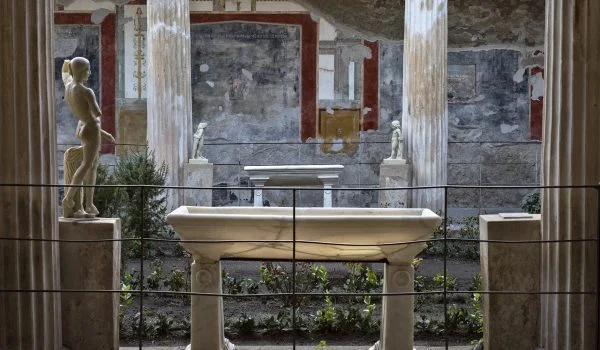
Owned by two wealthy freedmen, this house is a masterpiece of Roman domestic architecture. It features some of the finest examples of Fourth Style wall paintings and a beautifully restored peristyle garden with working fountains. The artwork here often depicts mythological scenes, showcasing the sta

Amphitheatre
Built around 70 BC, this is the oldest surviving stone amphitheatre in the Roman world. It could hold up to 20,000 spectators who gathered to watch gladiatorial bouts and wild animal hunts. Unlike later arenas, it has no underground sections, but its sheer scale provides a powerful sense of the anci

Garden of the Fugitives
This moving site serves as a sombre reminder of the human cost of the eruption. It contains the plaster casts of thirteen victims who were overcome by volcanic gases while attempting to flee toward the city walls. Found in what was once a vineyard, the positions of the bodies vividly convey the trag

Lupanar
The Lupanar is the city's most famous purpose-built brothel. This small, two-storey building features stone beds and explicit wall paintings above each doorway, which served as a "menu" of services. It provides a fascinating, if gritty, look into the social history and daily realities of the lower c
House of the Faun
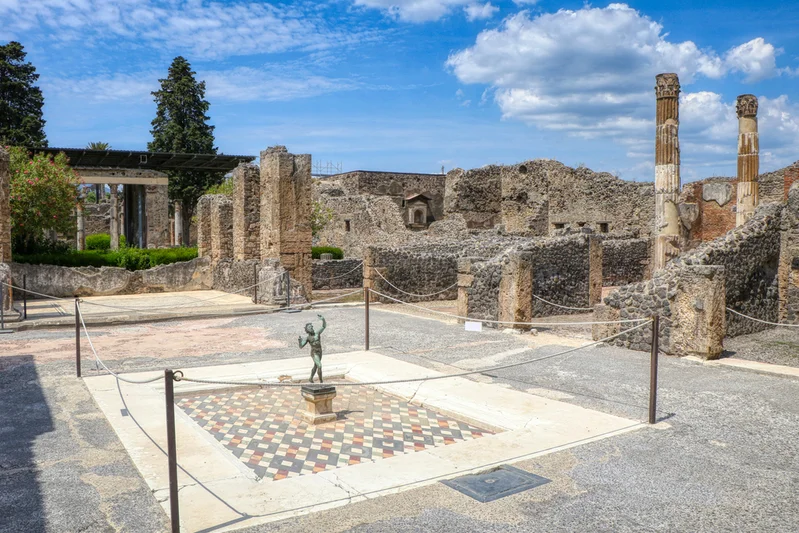
Spanning an entire city block, this is one of the largest and most impressive private residences. Named after the bronze statue of a dancing faun in the atrium, it was the original home of the famous Alexander Mosaic. The massive floor plan and intricate geometric mosaics reflect the immense wealth

Stabian Baths
These are the oldest public baths in the city, showcasing the sophisticated Roman engineering used for heating and water management. Visitors can explore the dressing rooms (apodyterium), the cold room (frigidarium), and the warm rooms. The intricate stucco decorations and the circular exercise yard

Temple of Apollo
Dominating the western side of the Forum, this is one of the oldest religious sites. The sanctuary features a mix of Etruscan and Greek architectural influences, surrounded by a large portico of columns. Bronze statues of Apollo and Diana stand in the courtyard, representing the enduring religious d

Macellum
Located in the northeast corner of the Forum, the Macellum was the city’s covered meat and fish market. The central circular structure likely held a water basin for cleaning fish. Remnants of charred fruit and cereal found here help historians understand the Roman diet, while the wall paintings depi
Tips to visit Archaeological Park of Pompeii
- Wear Comfortable Shoes: The ancient Roman roads are made of uneven basalt stones; sturdy footwear is a necessity for your Pompeii Italy tour.
- Bring Water: There are several ancient fountains with potable water throughout the park, so bring a refillable bottle.
- Sun Protection: Shade is extremely scarce among the ruins. Bring a hat, sunblock, and an umbrella if visiting during midday.
- Download a Map: The site is a massive labyrinth. Use a digital map or grab a paper map at the entrance to avoid getting lost.
- Hire a Guide: To truly understand the Pompeii Italy facts, consider a certified guide or a high-quality audio guide.
Want the best Italy package, handpicked just for you?
Share your travel needs and our travel experts will reach out to you.